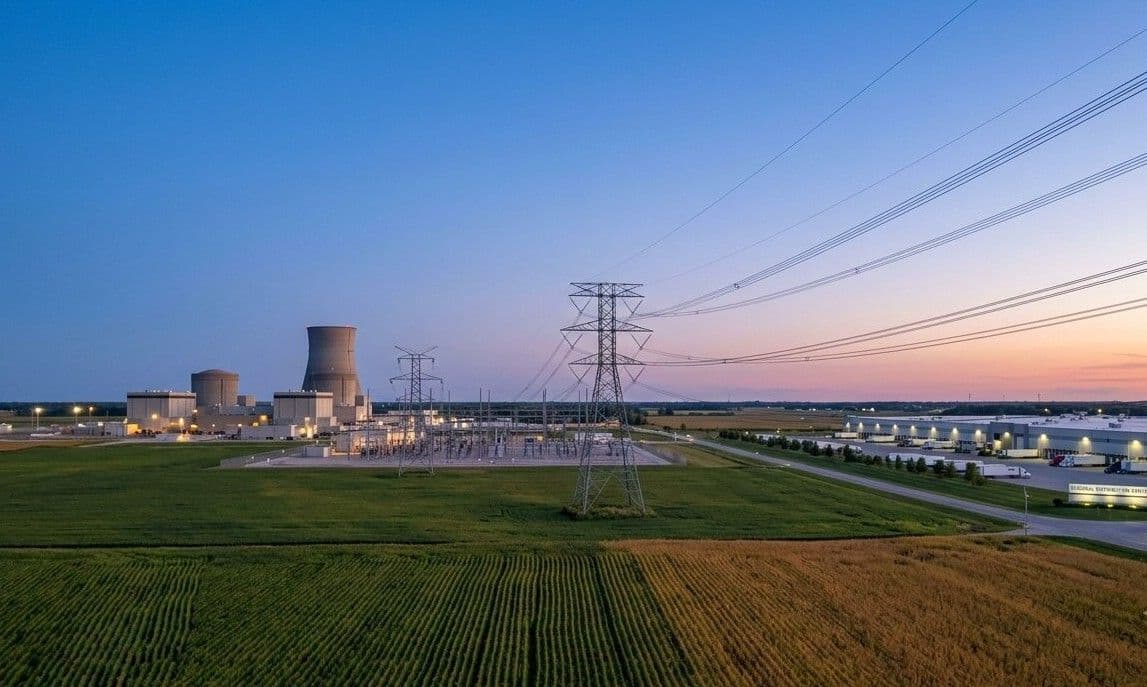
Blackstone-Led Consortium Commits $5.34B to Williams Power Projects

Takeaways
- Blackstone-led group invests $5.34 billion in Williams power projects, providing funding to expand behind-the-meter electricity generation in Ohio.
- The investment is driven by rising AI and data center power demand, while allowing Williams to retain operational control and reduce balance sheet pressure.
- The deal reflects a broader trend of private capital backing energy infrastructure, even as investors face growing climate and regulatory scrutiny.
Pipeline operator Williams has secured a $5.34 billion investment from a consortium led by Blackstone to support the expansion of its growing power generation business. The transaction highlights how private investors are increasingly funding energy infrastructure as electricity demand rises, particularly driven by artificial intelligence (AI) applications and large-scale data centers.
Under the agreement, the investor group will acquire a 49% noncontrolling stake in five behind-the-meter power projects being developed in Ohio. Investment vehicles managed by Apollo and KKR are also participating in the deal, while Williams will continue to oversee the commercial and operational management of the projects.
Read More: From Data to Impact: How AI Adoption Fuels Sustainable Business Growth
The consortium has committed $4.4 billion toward future development costs, representing nearly half of the expected capital expenditure for the projects. In addition, Williams will receive approximately $900 million as part of the transaction. The company said the financing structure enables it to expand its power portfolio without placing excessive pressure on its balance sheet.
The projects covered by the agreement, such as Socrates, Apollo, Socrates the Younger, Neo, and Aquila, are part of a development pipeline exceeding 6 gigawatts (GW). Williams' Power Innovation business has already announced more than 2.6 GW of projects, and the fresh investment is expected to accelerate further growth.
Demand for electricity has been rising rapidly as cloud computing, AI platforms and hyperscale data centers require reliable, high-capacity power supplies. In many regions, existing power grids are struggling to keep pace with this growing demand.
Williams is focusing on behind-the-meter power projects, which supply electricity directly to customers instead of relying entirely on the public transmission network. This approach can help data center operators avoid grid congestion, reduce delays in obtaining power connections, and improve energy reliability.
Such projects, however, require substantial upfront investment. As a result, private equity firms are playing a larger role in financing energy infrastructure while allowing utilities and developers to manage capital requirements more efficiently.
A key feature of the agreement is that Williams retains operational control and has the option to repurchase Blackstone's stake between the seventh and fourteenth years of the partnership, subject to agreed financial conditions. This provides the company with flexibility to regain a larger ownership position while continuing to pursue additional growth opportunities.
The transaction also supports Williams' long-term financial strategy by reducing its immediate capital commitments and preserving borrowing capacity for future investments. This could prove valuable as developers compete for land, fuel supplies, skilled labor, and grid connections for new power generation projects.
For Blackstone, Apollo, and KKR, the investment provides exposure to one of the fastest-growing infrastructure segments. As AI adoption continues to expand, the need for dependable electricity is expected to increase, creating long-term opportunities for power assets that serve major technology customers.
At the same time, investors will closely monitor the environmental impact of these developments. New power generation projects are likely to face increased scrutiny over emissions, fuel choices and their alignment with corporate decarbonization goals and state climate policies.
Also Read: Why AI Is Bad for the Environment: Real Costs in 2026
The Williams deal also reflects a broader shift in energy infrastructure investment, where companies are increasingly using partnerships and minority stake sales to fund large projects. As AI-driven electricity demand continues to reshape the energy sector, similar financing models are expected to become more common, balancing growth ambitions with financial discipline and long-term sustainability considerations.
Follow more news and views via our Sustainable Finance & Technology and Featured Articles sections, and stay updated on the top ESG events to attend in 2026 for industry insights and networking.
If you're looking for suitable ESG and Sustainability providers to share customized solutions specific to your business needs, you can check out KnowESG's Solutions page.
If you are an ESG provider looking to get your organization listed on our portal, visit this page.
Source: ESG NEWS
Get the ESG Brief in your inbox
One concise email a week — the ratings moves, regulation deadlines, and vetted solutions that matter. Trusted by sustainability and finance teams.
No spam · unsubscribe anytime.