Why AI Is Bad for the Environment: Real Costs in 2026

Artificial Intelligence (AI) is transforming the way we live, work, and solve problems. From predicting extreme weather events to optimizing energy use, AI has the potential to become a powerful tool for environmental protection. Yet, behind this promise lies a growing challenge: The environmental cost of creating and running these advanced systems. The energy-hungry data centers, extensive water use, and electronic waste generated by AI technologies have sparked concerns about what experts now call AI pollution. This piece explores how AI impacts the environment, the risks it poses, and the sustainable solutions that can help balance innovation with ecological responsibility.
Is AI Bad for the Environment?
Indeed, it can, and here’s how. AI can harm the environment due to its high demand for energy, water, and raw materials. Data centers that power AI models consume vast amounts of electricity, contributing to carbon emissions, especially where fossil fuels dominate. A single AI query can use up to 10 times more electricity than a standard online search, and data centers could account for 35% of Ireland’s electricity use by 2026. AI infrastructure also requires significant water for cooling, with estimates suggesting usage could equal six times Denmark’s national consumption. Rapid growth in AI may intensify pressure on natural resources and increase e-waste generation.
Why AI Is Bad for the Environment and How to Reduce Its Impact

Artificial Intelligence (AI) is an umbrella term for technologies that can process information, identify patterns, and simulate human decision-making. While basic AI has existed since the 1950s, modern breakthroughs have been fueled by advanced computing power and the availability of vast amounts of data. These capabilities have allowed AI systems to power applications from chatbots and predictive analytics to autonomous vehicles and climate monitoring tools.
However, alongside its promise comes a growing concern known as AI pollution, a term used to describe the environmental impact of AI technologies, from the energy-intensive process of training large machine learning models to the electronic waste (e-waste) generated by their supporting infrastructure. Data centers, which host and operate AI models, require massive amounts of electricity, water, and rare minerals, leaving behind a significant environmental footprint.
AI Environmental Impact by the Numbers (2026)
The environmental footprint of AI is becoming easier to quantify as more global studies emerge. According to the International Energy Agency (IEA), global data center electricity consumption is projected to approach 945 TWh by 2030, largely driven by AI adoption. This means AI-related infrastructure could account for around 3% of global electricity demand by 2030, growing at an estimated 15% annually, far faster than most other sectors.
Training large AI models also carries a measurable carbon footprint. Studies estimate that training a single advanced model, such as GPT-4 or comparable large language models, can generate hundreds to thousands of tonnes of CO₂ emissions, depending on data center efficiency and energy sources. Meanwhile, research suggests AI-related servers could add 24–44 million metric tons of CO₂ annually by 2030 in the United States alone.
As far as the future is concerned, AI electricity demand could increase up to 24 times by 2030 under high-adoption scenarios, highlighting the rapid scale of expansion expected across industries. These numbers illustrate why measuring and managing AI’s environmental footprint is becoming a priority for policymakers and sustainability leaders worldwide.
AI’s Potential for the Environment
Despite its environmental costs, AI also holds great promise for sustainability. Its ability to detect patterns in large datasets enables solutions to pressing environmental problems:
- Climate Monitoring: AI is already used to detect methane emissions from oil and gas facilities, track deforestation, and monitor ocean health.
- Resource Optimization: AI can forecast water demand, improve waste management, and help design energy-efficient infrastructure.
- Predictive Modeling: Through weather prediction and environmental modeling, AI can anticipate natural disasters, aiding in climate resilience.
Global initiatives like AI for Good demonstrate how AI can accelerate progress toward the UN’s Sustainable Development Goals (SDGs). The European Parliament’s research suggests that AI could reduce global greenhouse gas emissions by 1.5–4% by 2030, reinforcing its role as a powerful ally in the fight against climate change.
Featured Article: Practical Ways to Improve ESG Ratings for Sustainable Growt
Environmental Issues AI Leads to

Despite its potential, AI’s environmental downsides are increasingly visible:
Energy Consumption: Training and operating large AI models, including Generative AI (GenAI) and Large Language Models (LLMs), requires immense computational power. AI queries consume far more energy than traditional searches. For instance, one ChatGPT query can use 10 times more electricity than a Google Search.
Greenhouse Gas Emissions: Most AI data centers still depend on fossil-fuel-based electricity, driving GHG emissions that contribute to global warming.
Water Usage: Data centers require water for cooling. Global estimates suggest that AI infrastructure could soon use six times more water than Denmark.
E-Waste and Rare Minerals: Producing AI hardware depends on rare earth elements and metals that are often mined unsustainably. When discarded, servers and microchips contribute to hazardous e-waste, releasing substances like mercury and lead.
These challenges highlight that without intervention, the rapid expansion of AI could worsen existing environmental crises.
Striking a Balance: AI’s Sustainability Gains and Risks
AI represents a sustainability paradox: While it enables environmental solutions, its operational footprint is growing rapidly. Achieving balance requires a responsible deployment strategy:
- Maximizing environmental benefits: Encouraging the use of AI in climate modeling, biodiversity tracking, and energy efficiency.
- Minimizing negative impacts: Implementing energy-efficient model training, transitioning to renewable energy, and adopting water-efficient cooling technologies.
- Considering unintended effects: For example, AI-driven self-driving cars could increase private car usage, indirectly raising emissions if not paired with sustainable transport policies.
This balance is critical to ensure that AI innovation is in sync with long-term environmental goals.
Featured Article: Why ESG Providers Matter: The Backbone of Sustainable Investing
Core Elements: AI’s Environmental Footprint
AI’s environmental impact can be understood across four key dimensions:
- Compute Operations: Training LLMs with billions of parameters consumes copious amounts of energy. Even model inference, the stage where users interact with AI, can outpace initial training in energy use.
- Electricity Usage: The energy intensity of GPUs and data centers drives significant power demand, especially in regions where the grid depends on fossil fuels.
- Carbon Footprint: Non-renewable energy usage results in direct and indirect carbon dioxide emissions, often unreported due to gaps in monitoring methods.
- Water Usage: Data centers rely on water-intensive cooling systems, worsening water stress in vulnerable areas.
In addition, the production and disposal of AI hardware intensify environmental degradation through resource extraction and e-waste accumulation. Sustainable practices such as recycling components and developing edge AI solutions can mitigate these impacts.
How to Reduce AI's Environmental Footprint
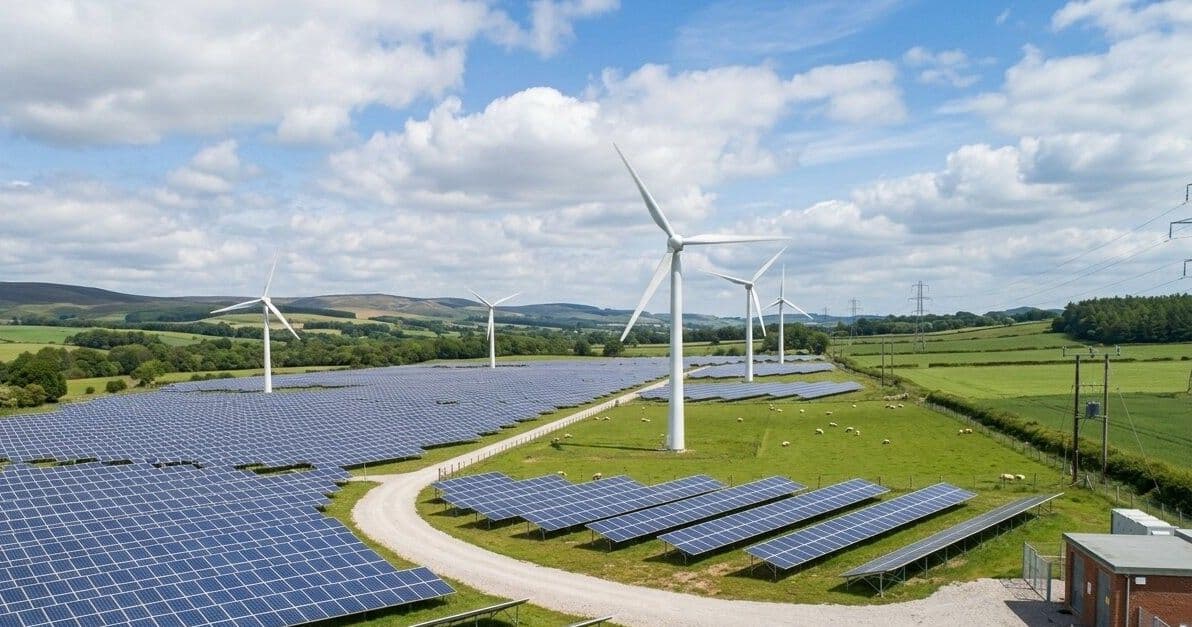
Reducing AI’s environmental footprint requires action from both organizations and everyday users. One of the most effective steps is choosing green-powered AI providers that operate data centers using renewable energy, such as solar or wind. Many technology companies are increasingly investing in low-carbon infrastructure to reduce carbon emissions linked to AI workloads.
Improving model efficiency is another key strategy. Not every task requires large, resource-intensive models. Using smaller or task-specific AI models for simpler activities can significantly lower energy consumption while maintaining performance. Techniques such as model optimization, compression, and efficient coding can further reduce computational demands.
Organizations can also adopt responsible AI usage policies, ensuring that AI tools are used only when they add meaningful value. Avoiding unnecessary prompts, limiting repetitive queries, and prioritizing high-impact use cases can help reduce excess resource consumption.
Finally, increasing awareness of AI sustainability encourages better decision-making. Tracking energy use, supporting providers committed to transparent reporting, and integrating AI sustainability into broader ESG strategies can collectively help minimize the environmental impact of AI as adoption continues to grow.
How Much Water and Energy Does ChatGPT Actually Use?
Recent estimates suggest that a typical GPT-4o query uses about 0.3–0.42 watt-hours (Wh) of electricity, significantly lower than earlier GPT-3.5 estimates of around 2–3 Wh per query. This means one modern AI response uses roughly 6–10 times more energy than a standard Google search, though efficiency improvements are gradually narrowing the gap.
Water consumption remains a concern. Research shows that 20–50 AI prompts may require about 500 ml of water for data center cooling, while global data center water use already exceeds billions of gallons annually, with demand expected to rise through 2026 as AI adoption grows.
Although newer models like GPT-4o and Claude 3.5 are more efficient per query, total environmental impact continues to increase as global AI usage scales rapidly across industries.
Comparison of AI vs Traditional Digital Activities (2026 estimates)
| Activity | Estimated Energy Use per Query | Relative Impact |
|---|---|---|
| Google Search | ~0.03–0.05 Wh | Baseline |
| GPT-4o query | ~0.3–0.42 Wh | ~6–10× higher |
| Older GPT-3.5 query | ~2–3 Wh | Up to 60× higher |
| AI image generation | ~15 Wh per image | Much higher compute demand |
| 20–50 AI prompts | ~500 ml water | Data center cooling impact |
Current Regulations: Sustainability

While AI governance is emerging, its environmental dimension remains underdeveloped. Current efforts include the following:
- EU AI Act: Introduces sustainability considerations in AI development and deployment.
- Corporate Sustainability Reporting Directive (CSRD): This requires organizations to disclose environmental performance, indirectly capturing AI’s footprint.
- Global Reporting Initiative (GRI) and Carbon Disclosure Project (CDP): These offer frameworks for ESG reporting that can include AI’s environmental impact.
- NIST AI Sustainability Framework: Encourages standardized measurement of energy usage and carbon emissions in AI systems.
Despite these measures, global guidelines are fragmented, and metrics for AI-specific emissions, water usage, and lifecycle impacts remain inconsistent.
Featured Article: Top 5 Social Sustainability Examples You Need To Know
Factors to Consider: Sustainability Leaders
For organizations seeking to lead in AI sustainability, several practical measures can lower AI’s ecological footprint, and they are as follows:
- Measure environmental impact: Track compute operations, electricity consumption, water usage, and carbon footprint.
- Employ energy-efficient solutions: Adopt smaller AI models, optimize GPU utilization, and run AI applications directly on edge or local devices where feasible.
- Embrace renewable energy: Transition data centers to solar, wind, or hydro-powered operations and invest in carbon offsets.
- Improve transparency: Include AI’s Scope 1, 2, and 3 emissions in sustainability disclosures to strengthen ESG reporting.
- Use open-source sustainability tools: Explore emerging platforms that estimate LLM emissions, even with limited access to proprietary model code.
Proactive adoption of these practices can make AI ecosystems more sustainable while supporting global environmental commitments.
Final Thoughts
The rise of AI presents both opportunities and challenges for the planet. On one hand, AI-driven innovation can accelerate climate action, optimize resource use, and improve environmental monitoring. On the other hand, AI pollution, arising from energy use, water consumption, and e-waste, poses a tangible risk to sustainability.
Moving forward, collaboration between governments, tech companies, and sustainability leaders is critical to standardize measurements, reduce environmental footprints, and align AI deployment with global climate goals. By balancing innovation with accountability, AI can become a force for positive environmental change rather than a hidden contributor to ecological stress.
Featured Article: Definitions of Sustainability: A to Z Guide on Sustainability
Find Carbon & Climate Solutions
Frequently Asked Questions (FAQs)
What is AI pollution, and why is it a growing concern?
AI pollution refers to the environmental impact caused by AI technologies, including data centers, energy consumption, carbon emissions, and electronic waste (e-waste). It is a growing concern because AI development requires massive computational power, which contributes to a larger carbon footprint and environmental degradation.
How does artificial intelligence contribute to environmental harm?
Artificial intelligence (AI) contributes to environmental harm mainly through high electricity consumption, water usage for cooling systems, and carbon dioxide emissions from data centres. Training large language models and deep learning models requires vast datasets and computational power, which increases energy demands and strains natural resources.
Why do AI models require so much energy?
AI models, especially Generative AI models and deep learning models, need huge amounts of computational power for the training process. This energy use comes from cloud computing and edge computing, leading to higher electricity consumption and environmental costs unless renewable energy sources are utilized.
How can AI’s environmental impacts be mitigated?
To mitigate AI's environmental impacts, organizations can focus on optimizing energy consumption, using renewable energy, investing in sustainable AI, and implementing responsible development practices. Techniques like predictive maintenance, efficient cooling systems, and waste management can also reduce environmental harm.
What role does e-waste play in AI pollution?
Electronic waste (e-waste), generated from outdated AI systems, data centers, and hardware, can contaminate soil and harm water management efforts if not discarded properly. Implementing sustainable development goals for waste management is critical to avoid negative impacts on future generations.
How can sustainable AI support a greener future?
Sustainable AI focuses on reducing the environmental footprint of AI usage through renewable energy, environmental monitoring, and ongoing research in responsible approaches. It aims to create a sustainable future where AI applications benefit various sectors without causing environmental degradation.
Can AI help with environmental conservation and sustainable development?
Yes, AI applications can support environmental conservation and sustainable development by enabling sustainable agriculture, water management, and climate change monitoring. AI algorithms can also optimize energy usage and natural resource management to support the United Nations Sustainable Development Goals (SDGs).
What are the economic and environmental trade-offs of AI development?
While AI development promotes economic growth and has transformative potential across various sectors, it comes with environmental costs such as carbon emissions, water usage, and energy demands. Adopting a responsible approach is essential to balance AI’s environmental impacts with societal benefits.
Why is there an urgent need for responsible AI development?
There is an urgent need for the responsible development of AI systems to reduce environmental challenges, negative impacts, and environmental harm caused by AI technologies. Building sustainable AI solutions ensures the protection of future generations and supports a sustainable future.