Emissions Tracking Software: Monitor Scope 1, 2, 3 Emissions with ESG Platforms

As global regulations tighten and value-chain emissions come under unprecedented scrutiny, organizations are rethinking how they collect, measure, and report their carbon footprint. Manual spreadsheets, fragmented data sources, and inconsistent methodologies can no longer keep pace with modern disclosure obligations such as CSRD, SEC-aligned rules, and evolving investor expectations. As the market matures, advanced ESG platforms are transforming what used to be an annual reporting exercise into a continuous, intelligence-driven process that helps companies not only report emissions but also reduce them.
Featured Article: Environmental Reporting Software: Solutions for Emissions & Impact Tracking
What is Emissions Tracking Software?
Emissions tracking software is a digital system designed to measure, manage, and report an organisation’s greenhouse gas (GHG) emissions across Scope 1, Scope 2, and Scope 3 categories. These platforms consolidate data from multiple sources, such as energy bills, fuel consumption logs, supplier disclosures, logistics files, and operational systems, and convert them into auditable carbon metrics using recognized methodologies like the GHG Protocol.
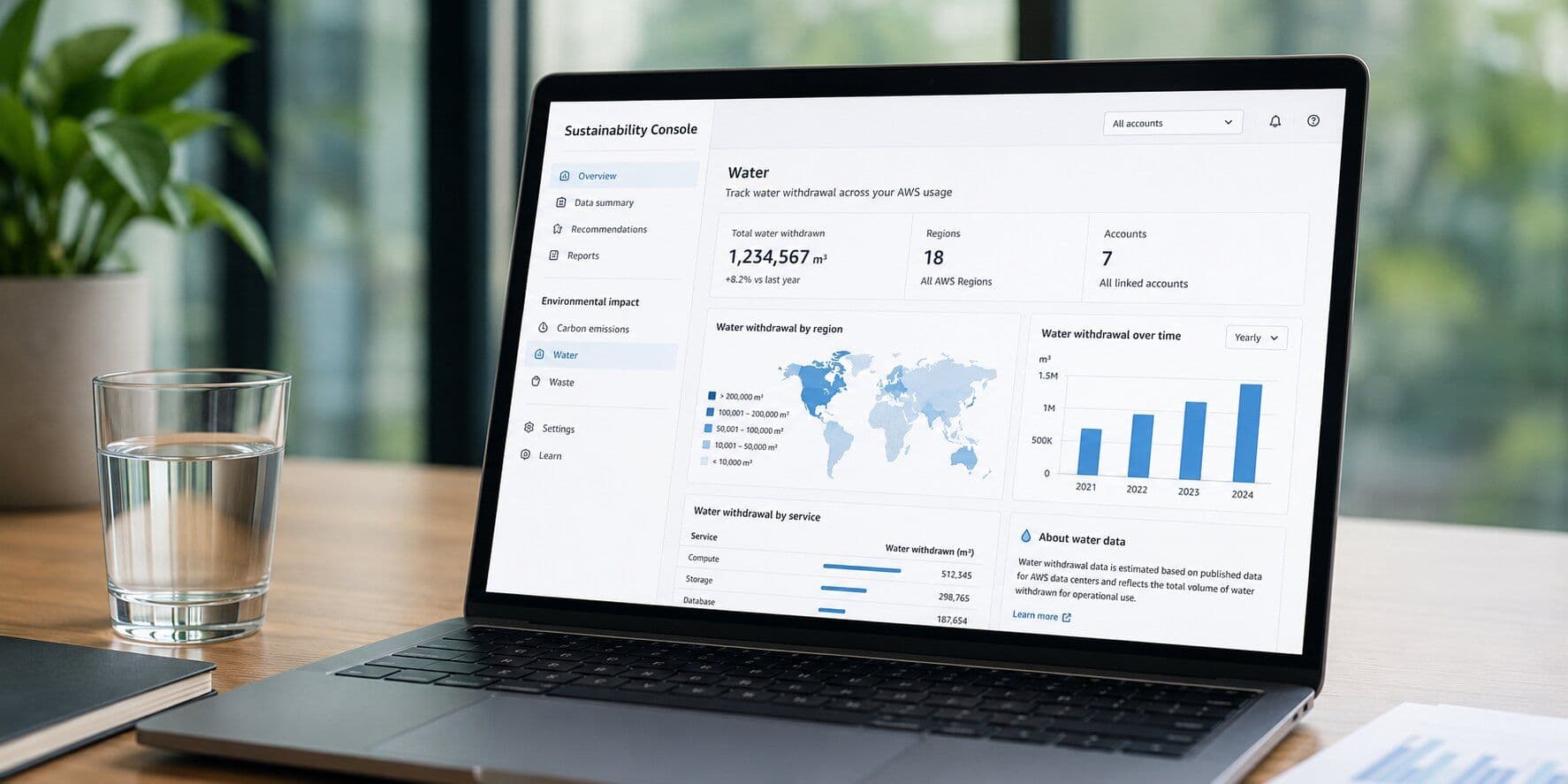
Modern tools go beyond simple data collection; they automate carbon accounting, surface reduction opportunities through analytics, and provide real-time dashboards to help sustainability teams, CFOs, and operational leaders make informed decisions. By centralizing fragmented data and standardizing complex calculations, emissions tracking software enables companies to streamline compliance reporting, reduce manual errors, and build transparent, science-aligned decarbonization strategies.
What Counts as Scope 2 Emissions?
Scope 2 emissions are the indirect greenhouse gas emissions that come from the electricity, steam, heating, or cooling a company purchases from an external utility. Even though the organization does not produce these emissions directly, it is still responsible for them because it depends on that energy to run offices, factories, stores, or data centres. In simple terms, whenever a company buys power or thermal energy generated outside its own operations, the related emissions fall under Scope 2.
What Are Scope 3 Emissions?
Scope 3 emissions are all the indirect greenhouse gas emissions that occur across a company’s entire value chain, excluding the energy it buys. These can come from suppliers, transportation partners, product use by customers, waste generated during operations, employee commuting, and more. They are often the largest and most complex category to measure because they involve many external entities. In simple terms, Scope 3 emissions cover everything a business influences but does not directly control.

Why Is Data Quality Critical?
High-quality data is the backbone of accurate emissions reporting. When companies rely on inconsistent, incomplete, or outdated information, even the most advanced emissions tracking software cannot produce reliable results. Poor data quality leads to incorrect carbon footprints, weak insights, and compliance risks, especially as regulators tighten disclosure rules.
Accurate, granular data ensures that Scope 1, Scope 2, and Scope 3 calculations reflect real operational activity, not estimates or assumptions. It also strengthens audit readiness, supports automated workflows, and helps organizations identify meaningful decarbonization opportunities rather than chasing misleading signals. In short, strong data quality turns emissions tracking from a paperwork exercise into a credible decision-making tool.
Features of Advanced Emissions Tracking Software
Modern emissions tracking software combines three capabilities: Data ingestion and normalization, rigorous carbon accounting (GHG calculations), and governance (audit trails, roles, and approvals). Key features include connectors for utility bills, ERPs, travel providers, freight platforms, and supplier portals; an emissions-factor library aligned to GHG Protocol, IPCC, and regionally accepted sources; versioned ledgers to maintain immutable calculation history; and role-based workflows for approvals and evidence attachment. Together, these features reduce manual effort and improve the defensibility of reported emissions.
Real-Time Dashboards and Carbon Accounting Modules
Real-time dashboards visualize emissions by scope, business unit, site, or product line. A robust carbon accounting module houses conversion logic, supports multiple methodologies (location- vs market-based Scope 2), and lets teams run scenario modelling. E.g., the impact of switching to a renewable electricity contract or changing shipping modes. Reporting modules generate disclosure packages for CDP, GRI, and CSRD and export audit-ready datasets. Importantly, the best platforms maintain a Footprint Ledger, a single source of truth for historical and current emissions data with full traceability.

Featured Article: Carbon & Emissions Accounting: Tracking, Reporting, and Software
Top Emissions Management & Carbon Accounting Software Platforms
Persefoni
Persefoni centers on carbon accounting with a ledger approach that treats emissions data with the same rigor as financial data. The platform offers a “Pro” entry tier with foundational carbon accounting features and an advanced tier for enterprise needs. Persefoni’s Footprint Ledger provides activity-level transparency, audit logs, and built-in alignment with GHG standards, helping teams demonstrate method consistency and reproducibility. It also offers integrations for ERP, fuel, and utility data, and supplier reporting channels, enabling automated ingestion and mapping to Scope 1, 2, and 3 categories.
Persefoni emphasizes calculation transparency, i.e., every emission result ties back to activity data and the factor used, and provides pre-configured reporting templates for common disclosure standards. For compliance-heavy use cases (for example, state or region-specific reporting), Persefoni offers compliance services and customized packages; some compliance bundles (e.g., California SB 253 and SB 261 reporting services) are priced from stated baselines on its site, showing that enterprise compliance engagements can be substantial investments.
Featured Article: ESG SaaS Platform: Cloud-Based Solutions for Modern Sustainability Programs
Sphera
Sphera emphasizes enterprise sustainability with deep LCA and operational context. SpheraCloud covers environmental accounting, EHS, and product life-cycle analysis, which positions Sphera well for Scope 3 calculations that need industry-specific life-cycle data. Their solution captures operational data and procurement records, maps spend and bill-of-materials to LCA factors, and provides out-of-the-box dashboards that align to CSRD, CDP, and GRI frameworks. Sphera’s strength lies in combining plant-level operational data (e.g., emissions monitors, process variables) with supply-chain modelling to quantify upstream emissions with higher fidelity than simple spend-based approaches.
For organizations that have complex manufacturing footprints, Sphera’s configurability and LCA databases reduce manual modelling effort. Pricing for SpheraCloud is typically quoted on a per-customer basis (enterprise talks), so the vendor generally asks prospects to contact sales for a tailored estimate; third-party marketplaces and analyst sites, however, show indicative enterprise spend ranges and negotiation points, reflecting the bespoke nature of deployments.
Microsoft Sustainability Manager (Microsoft Sustainability Cloud)
Microsoft’s Sustainability Manager (sometimes referred to in product messaging as part of Microsoft Cloud for Sustainability) integrates Dataverse, Azure data services, and AI tools to centralize emissions, energy, and sustainability data. The platform is built for enterprises already on Microsoft stacks because it leverages Azure connectors, Microsoft 365 integration, and Dataverse entitlements (storage and AI builder credits are included in certain licensing tiers).
Microsoft publishes licensing and plan detail documents (which show entitlements for Essentials and Premium plans) and positions the product to enable enterprise-scale data normalization, calculations, and reporting while also enabling integration with finance and asset systems via API. The vendor licensing and plan documents provide technical entitlements, while pricing is typically delivered via Microsoft licensing channels or partner engagements; organizations often combine this product with Azure consumption and implementation services when estimating the total cost of ownership. For enterprises already invested in Microsoft, the platform reduces integration time and enables a single data model for sustainability metrics alongside operational data.
IBM Envizi
IBM Envizi is an analytics-driven ESG data platform focused on sustainability reporting, emissions calculations, and decarbonization planning. Envizi centralizes corporate and supply-chain data, including utilities, facilities, and asset telemetry, and provides powerful modelling tools for both operational emissions (Scope 1 and 2) and supply-chain emissions (Scope 3). The platform’s reporting capabilities are aimed at auditors and regulators: It can produce disclosure-ready outputs and includes built-in frameworks for regulatory alignment.
IBM offers an online pricing estimator and deploys Envizi via subscription or marketplace channels; an AWS Marketplace listing shows example starting pricing tiers for certain configurations, illustrating that larger data volumes and enterprise features can push costs into mid-five-figure to six-figure ranges depending on contract length and scope. IBM’s professional services and partner ecosystem also support supplier engagement and system integrations, which are commonly part of larger deployments.
For more information on the ESG services and solutions provided by IBM Envizi, request KnowESG for a demo by clicking here.
Featured Article: ESG Data Platform Explained: How to Centralize Your Sustainability Data
Salesforce Net Zero Cloud
Salesforce Net Zero Cloud is an enterprise sustainability solution built on the Salesforce platform. It brings carbon accounting into the same environment where customer, financial, and supply-chain data often already live for many customers, enabling cross-system analytics and supplier engagement via CRM channels. Net Zero Cloud supports Scope 1, 2, and 3 calculations, supplier sustainability data capture, carbon credit management, and disclosure workflows. It also offers advanced features such as Agentforce and Einstein AI to support disclosure authoring and data-driven insights.
Salesforce publishes edition details and directs customers to contact sales for pricing; independent software review sites and vendor-comparison pages indicate starter packages and growth editions with annualized pricing (indicative ranges have appeared in third-party listings and vary widely depending on entitlements and enterprise add-ons). As a benefit, Net Zero Cloud pairs with the broader Salesforce ecosystem (MuleSoft, Data Cloud, AppExchange partners), enabling complex integrations and extendable automation workflows for supplier data collection and Scope 3 mapping.
Emissions Management Software Comparison: Persefoni vs. Sphera vs. Microsoft vs. IBM vs. Salesforce
| Platform | Typical strengths | Pricing (public/indicative) | Pricing notes | |
|---|---|---|---|---|
| Persefoni | Carbon ledger, calculation transparency, compliance bundles | Free Pro tier; Advanced / Enterprise commercial tiers. Compliance services (example bundle) start from $40,000 | Persefoni lists a free Pro offering and paid enterprise tiers; compliance bundle example pricing from the vendor page | |
| Sphera | LCA, operational data integration, manufacturing focus | Pricing: Contact vendor (enterprise quoted); third-party sources show variable enterprise ranges | Sphera normally provides custom quotes; analyst and marketplace pages show negotiation/enterprise pricing | |
| Microsoft Sustainability Manager | Deep Microsoft stack integration, Dataverse entitlements | Licensing details and plan entitlements published; pricing via Microsoft channels/partner quotes | Microsoft publishes plan & entitlements (Dataverse storage, AI credits) but typically sells via licensing channels; refer to MS pricing doc | |
| IBM Envizi | Analytics, reporting, and large-scale data handling | Marketplace example: starting figures shown ≈ $30,000 (varies by data volume and contract) | IBM provides an online pricing estimator; AWS Marketplace listing shows an example configuration starting point | |
| Salesforce Net Zero Cloud | CRM + supplier engagement, AI authoring | Third-party listings indicate Starter ≈ $48,000/yr, Growth ≈ $210,000/yr (indicative) | Salesforce lists contact-for-pricing; independent vendor sites show indicative edition pricing; confirm with Salesforce for exact terms |
ROI of Automated Emissions Tracking
Automating emissions tracking increases speed and reduces errors. Typical ROI categories include reduced staff hours for data gathering, faster reporting cycles (months to days), lower risk of misstatements in investor/regulatory reporting, and better decision-making through scenario modelling. Companies often find that automation pays back via efficiency gains and avoided compliance costs, and because better visibility reveals high-impact reduction levers (e.g., energy efficiency projects, shipping mode changes) that drive operational savings. For many organizations, soft ROI (reduced labor, faster audits) materializes first; hard ROI (energy cost savings, lower carbon tax exposure, or reduced supply-chain costs) accrues over time as decarbonization actions are implemented.
Efficiency, Accuracy, and Cost Savings
Efficiency improvements are realized by replacing manual aggregation with connectors and OCR pipelines, which reduce error rates and cut reconciliation time. Accuracy improves through standardized factor libraries and a single Footprint Ledger for traceability. Cost savings come from two sources: Operational (less staff time, fewer consultant hours) and strategic (targeted decarbonization projects discovered by analytics). When evaluating ROI, include software licensing, implementation services, and ongoing data-management labor, and compare that against the cost of manual processes plus the risk-cost of inaccurate disclosure.
Discover KnowESG Carbon & Climate Solutions
KnowESG provides advisory and platform-agnostic implementation services for carbon accounting, emissions tracking, and ESG reporting. If you need support selecting emissions tracking software, launching a supplier data program for Scope 3, or building automation workflows for a Footprint Ledger, KnowESG can help map data sources, design carbon accounting structures, pilot leading platforms, and prepare disclosure-ready reports. Explore KnowESG’s services for tailored advisory, implementation support, and managed reporting, ideal for accelerating accurate Scope 1, 2, and 3 tracking without rebuilding your data architecture.
Final Thoughts
Accurate emissions data is rapidly becoming one of the most important operational assets for any organization pursuing sustainability credibility, regulatory compliance, or long-term competitiveness. The shift from fragmented systems to automated, intelligence-enabled carbon accounting is no longer optional; it is foundational to how companies will manage climate risk and shape their decarbonization pathways. Modern emissions tracking software brings transparency, speed, and audit-ready rigor to scope 1, 2, and 3 emissions tracking, while advanced ESG platforms strengthen supplier engagement and integrate reduction insights into everyday decision-making.
As reporting rules grow stricter and expectations for transparency rise, investing in dependable emissions management systems delivers clear operational and reputational benefits. For organizations building scalable carbon accounting workflows, KnowESG’s advisory and implementation support can help accelerate accurate reporting and tangible climate progress.
Frequently Asked Questions
How does emissions tracking software help identify emission hotspots?
These platforms compile emissions sources across operations, purchased electricity, waste disposal, vehicles owned, and the supply chain. By analyzing this emissions data, the software highlights emission hotspots, areas that cause the highest environmental impact. Companies can then focus their emissions management efforts on the most carbon-intensive activities.
How do ESG platforms support emissions reduction targets and climate risk management?
ESG platforms help companies set emissions reduction targets based on the greenhouse gas protocol. They provide insights into carbon emissions trends, model future projections, and monitor progress toward reaching net zero. They also strengthen risk management by identifying dependencies on fossil fuels, evaluating the shift to electric vehicles or wind turbines, and reducing exposure to climate change–related risks.
How can emissions tracking software help companies create a positive impact and enhance their reputation?
By monitoring direct emissions, indirect emissions, and value chain emissions, companies can implement strategies to reduce emissions and showcase their environmental impact improvements. Strong sustainability performance, backed by reliable emissions tracking, enhances reputation with stakeholders, investors, and customers. It also demonstrates commitment to new technologies and comprehensive sustainability goals.
How can software enhance reputation?
Emissions tracking software enhances a company’s reputation by providing transparent, credible data on its carbon footprint and greenhouse gas emissions. By using ESG software to monitor direct emissions, indirect emissions, and value chain impacts, companies can publicly demonstrate progress toward emissions reduction targets and compliance with the greenhouse gas protocol. This level of accountability builds stakeholder trust, strengthens investor confidence, and positions the company as a proactive leader in sustainability, ultimately contributing to a stronger, more positive brand image.
Get the ESG Brief in your inbox
One concise email a week — the ratings moves, regulation deadlines, and vetted solutions that matter. Trusted by sustainability and finance teams.
No spam · unsubscribe anytime.