ESG Data Platform Explained: How to Centralize Your Sustainability Data

In the era of heightened regulatory scrutiny, stakeholder expectations, and sustainability ambitions, organizations increasingly turn to digital solutions to manage their environmental, social, and governance landscape. An ESG data platform offers a unified way to capture, aggregate, validate, analyze, and report ESG data across functions and value chains. Rather than siloed spreadsheets, legacy systems, and disconnected tools, a centralized platform becomes the “single source of truth” for sustainability data, enabling IT, operations, and governance teams to work with consistency, audit-readiness, and scale.
From an IT/operations perspective, the challenge is not simply the business goal of sustainability, but the infrastructure, integration, data governance, and operational workflows required to underpin it. This article explains why organizations need a centralized solution, how it drives efficiency, the steps to implement it, the key benefits, typical use cases, how it supports third-party risk and governance, why integrated reporting matters, and what the future holds.
Featured Article: Understanding ESG Data and How to Use It
Why Organizations Need a Centralized ESG Data Solution
Organizations face multiple pressures: Regulatory mandates (for example, the Corporate Sustainability Due Diligence Directive (CS3D) effective July 2024), an investor focus on ESG metrics, supply-chain risk, and legacy, fragmented data landscapes.
For IT and operations teams, this means:
- Multiple ESG-related data sources (energy meters, emissions calculations, HR systems, supplier management, procurement systems, IoT sensors).
- Inconsistent formats, missing metadata, poor lineage, and auditability.
- Siloed ownership across functions (sustainability team, procurement, operations, IT).
- Manual workflows (spreadsheets, email forms) that are error-prone and not scalable.
- A need to integrate ESG disclosure with broader enterprise data and governance frameworks (for example, linking ESG metrics to financial and operational performance).
By centralizing the data into a dedicated platform, you gain the ability to define a consistent data model, apply enterprise-grade governance, integrate with your IT ecosystem, and automate workflows rather than managing ad hoc spreadsheets. As one study puts it: “Establish a centralized data repository or ESG management platform where all collected data can be stored, accessed, and analyzed.”
Featured Article: ESG Performance Explained: Metrics, Frameworks & Measurement
How Centralized ESG Data Platforms Enhance Efficiency

From an IT/Operations lens, a centralized platform yields multiple efficiency gains:
1. Data integration and consolidation
Rather than pulling fragmented data from multiple systems, the platform integrates data sources (ERPs, procurement systems, BMS/IoT, HR, supply-chain systems, third-party vendor data) into one hub. For example, one vendor describes their solution as handling data acquisition, cleansing, normalization, validation, and distribution for ESG.
2. Workflow automation and error reduction
Manual processes create risk and inefficiency. A well-designed ESG data platform automates data ingestion, validation rules, dashboards, alerts, and report generation. As noted: “An ESG software tool can help improve the quality and audit-readiness of data.”
3. Single source of truth and auditability
When operations across the business draw from the same underlying data model, you eliminate duplicate or conflicting versions of truth. This is operationally efficient and supports governance.
4. Real-time visibility and decision support
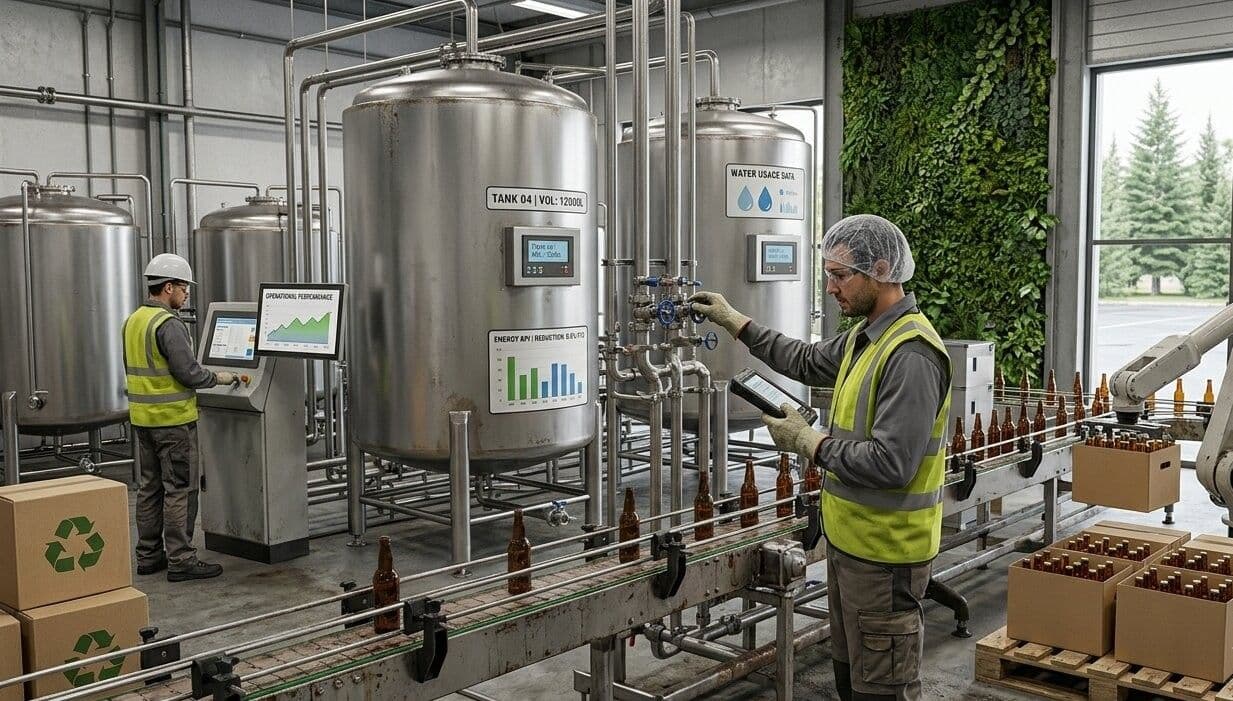
Rather than static reports, IT/ops teams can leverage dashboards and analytics to monitor ESG metrics, plan interventions (e.g., energy usage, supply-chain risk), and embed sustainability into operational decision-making.
5. Scalability and regulatory readiness
As ESG reporting demands grow, a centralized platform allows you to scale your data model, support multiple frameworks (e.g., GRI, SASB, ESRS), and address regulatory changes without re-engineering every time
Featured Article: ESG Trends: Annual Outlooks, Regulations, and Developments
Steps to Centralize and Manage Your Sustainability Data
For IT/operations teams tasked with implementing such a platform, here’s a logical phased approach:
1. Define scope and data model
- Identify which ESG metrics and KPIs you must capture (Environmental: e.g., Scope 1/2/3 emissions; Social: Workforce diversity, labor safety; Governance: compliance audits, board composition) as well as supply-chain/third-party data.
- Map existing data sources: Internal systems (ERP, HR, BMS, IoT), external (vendors, suppliers, third-party risk).
- Design a unified data model to support integration and reuse.
2. Establish data governance and stewardship
- Appoint data owners/ stewards across functions (IT, operations, sustainability, procurement).
- Define data definitions, collection methods, frequency, validation rules, lineage, and audit trails.
- Implement standard operating processes (ingestion → cleansing → validation → storage → usage).
3. Build the infrastructure and integration backbone
- Select or build the ESG data platform: Consider a cloud-based or hybrid architecture for scalability.
- Develop integration pipelines (APIs, ETL/ELT) to pull data from source systems.
- Implement data quality controls, error handling, metadata management, and data lineage.
4. Consolidate and normalize data
- Ingest data from heterogeneous sources, apply transformations/normalization so that metrics are comparable.
- Deduplicate, validate for completeness/consistency, and store in your central repository.
5. Automation, workflows, and analytics
- Build dashboards and reports tailored to operations/IT stakeholders and sustainability teams.
- Automate recurring workflows: e.g., supplier data requests, emissions factor updates, KPI tracking.
- Implement real-time or near-real-time data updates where relevant (e.g., IoT energy meters).
6. Reporting and disclosure
- Align your reporting templates with frameworks and regulatory requirements (e.g., ESRS, CSRD, CS3D) and integrate them into the platform.
- Enable audit trails so every data point is traceable back to the source and transformation.
7. Continuous improvement and scale-up
- Monitor performance of the platform (data quality metrics, timeliness, user adoption).
- Scale to additional geographies, suppliers, and tiers in your value chain.
- Embed continuous feedback from operations teams to refine metrics, dashboards, and integrations.
Featured Article: Definitions of Sustainability: A to Z Guide on Sustainability
Key Benefits of an Integrated ESG Data Platform

Let’s summarize the main benefits you’ll realize when you move from fragmented ESG data processes to an integrated platform:
- Improved data quality and consistency: Centralizing data allows you to define common definitions, reduce errors, and improve audit-readiness.
- Time and cost savings: Automating workflows and moving away from manual spreadsheets frees operational bandwidth.
- Better decision-making: With unified dashboards and integration of ESG data with operational/financial data, you can make smarter trade-offs (e.g., energy investments, supply-chain partner selection).
- Regulatory compliance and reporting readiness: Supports disclosure frameworks and allows traceability, which is increasingly demanded by regulators and auditors.
- Operational resilience and supply-chain transparency: By integrating third-party data, you reduce the risk of hidden exposures and build transparency across your ecosystem.
- Stakeholder trust and transparency: Reliable ESG data boosts credibility with investors, regulators, and customers
- Scalability for future needs: A platform-based approach allows you to add new data sources, analytics, and frameworks without rebuilding.
Featured Article: Understanding the Anti-ESG Movement: Criticism & Impact
ESG Data Platforms: Use Cases
Some typical use cases of centralized ESG data platforms include:
- Energy & emissions tracking: Pulling IoT meter data, utility bills, converting to greenhouse-gas emissions (Scope 1/2/3), and tracking intensity metrics (e.g., emissions per revenue or per unit produced).
- Supplier / third-party ESG evaluation: Collecting supplier questionnaires, audit reports, and performance data, integrating into your supplier master data to evaluate ESG performance and risk.
- Procurement dashboards: Visualizing metrics such as percentage of spend with sustainable suppliers, supplier-risk heat maps, and supplier compliance against policies.
- Operational risk monitoring: Tracking workplace safety incidents, environmental incidents, governance violations across operations and suppliers, and embedding alerts/workflows.
- Integrated reporting: Generating ESG disclosures (annual report, sustainability report) aligned to frameworks such as GRI, SASB, ESRS, TCFD, and linking them with financial and operational metrics.
In each case, the platform acts as the operational backbone for sustainability-data operations.
Third-Party Risk and Governance: Building Sustainable Partnerships
Third-party risk and governance are a central part of sustainability operations. Many organizations rely on complex multi-tier supply chains, subcontractors, vendors, and outsourced service providers, each of which introduces ESG risk (environmental violations, human-rights issues, governance lapses). As observed in one reference: “third-party governance that integrates ESG criteria has become essential.”
Here’s how centralizing ESG data supports this area:
- By integrating supplier data (questionnaires, audits, performance metrics) into your central ESG data platform, you build a supplier master record that enables consistent evaluation.
- You can apply workflows to assess, flag, and follow up on high-risk third parties (for example, via scorecards, risk heat maps, alerts).
- Data lineage and audit trails allow you to demonstrate oversight of your value chain, which is crucial under regulatory regimes like CS3D.
- You can integrate your ESG data platform with your broader vendor-risk management system, creating operational visibility into ESG risk beyond standard vendor risk.
- You can build supply-chain transparency by aggregating data from suppliers and sub-suppliers into the platform, enabling cross-supplier benchmarking rather than isolated point assessments. According to sources, this mutualization of data reduces “supplier fatigue” and improves data quality.
For IT/ops teams, this means working closely with procurement and risk teams to define the key data elements, build the supply-chain data ingestion pipelines, design scorecards and dashboards, and embed workflows for ongoing monitoring rather than a one-off audit.
Featured Article: 10 Best ESG Data Solutions and Services Provider Companies in Europe
The Growing Significance of Integrated ESG Reporting

Reporting is no longer a tick-box exercise; for many organizations, it is central to their risk-management, investor communication, and regulatory compliance strategies. Key trends and implications for IT/operations teams include the following:
- Regulation is advancing: For example, the CSRD (Corporate Sustainability Reporting Directive) in Europe will require many companies to publish audited, data-driven ESG reports.
- Investors and stakeholders expect accurate, auditable, consistent data, not manual spreadsheets or one-off disclosures. As one article states, “Companies with strong ESG performance show significant financial improvement over time,” and isolated methods are insufficient.
- Integrated platforms enable real-time or near-real-time reporting, not just end-of-year disclosures. IT/operations teams can support this by setting up dashboards, live feeds, and kinetic reporting workflows.
- Because ESG data now needs to tie into financial, operational, and risk-management systems, reporting becomes cross-functional, requiring IT to support integration across domains.
- Having a single platform for data collection, storage, governance, and reporting results in faster report generation, better accuracy, and fewer ad hoc fixes. For example: “By leveraging technology … companies can save time and resources previously spent on manual data collection and report creation.”
Thus, for operations and IT, building an ESG data platform is not just about collecting metrics, but enabling the entire reporting chain, from raw data capture through to stakeholder disclosure.
Featured Article: Best ESG Software 2025: Top Platforms and Providers Compared
The Future of ESG Data Platforms
What should IT and operations teams anticipate as the next evolution of ESG data platforms?
- AI and predictive analytics: Platforms will increasingly incorporate AI/ML to predict ESG risk, model emissions trajectories, and surface anomalies or third-party risk proactively. For example, one academic study of extracting ESG data using LLMs indicates the direction of advanced automation in ESG data extraction.
- Real-time monitoring and IoT integration: As operations generate more sensor/IoT data (energy, water, waste, emissions), platforms will ingest and analyze this near-real-time, offering operational insights and enabling immediate action.
- Graph-data models and extended value-chain analysis: As supply chains become more complex, platforms will leverage graph databases to model relationships among suppliers, subcontractors, assets, and risks (one study shows graph databases are efficient for such analysis).
- Interoperability across frameworks and standards: Given the proliferation of ESG reporting standards, platforms will offer built-in support for multiple frameworks, mapping between them, and automating disclosure generation.
- Collaborative ecosystems and data-mutualization: Some sectors may move to shared platforms where multiple organizations (e.g., in the same supply chain or industry) share ESG data, reducing duplicate effort and enabling benchmarking.
- Embedded sustainability workflows: ESG data platforms will move from reporting-centric to operational-centric. E.g., linking to maintenance systems, procurement systems, production planning, so that sustainability becomes a live operational parameter rather than a separate function.
- Stronger governance, traceability & audit-readiness: As regulators require assurance over ESG data, platforms will embed audit trails, lineage, metadata, versioning, and be capable of supporting external assurance.
For IT/ops teams, this means your architecture, data governance, integration strategy, monitoring, and operational workflows must anticipate this evolution, design for scalability, interoperability, modularity, and analytics.
Final Thoughts

For organizations serious about sustainability, compliance, and operational resilience, an ESG data platform is not optional; it is foundational. From the viewpoint of IT and operations, the implementation of such a platform is both a technical and strategic endeavor: you’re building the infrastructure, data pipelines, governance, and analytics that turn raw sustainability data into actionable insights and credible disclosures.
By centralizing your ESG data, you gain consistency, scalability, audit-readiness, and the ability to embed sustainability into operations rather than treating it as an afterthought. The implementation journey requires thoughtful scoping, data model definition, integration, automation, governance, and continuous refinement. But the payoff is significant: operational efficiency, lowered risk, improved stakeholder trust, and readiness for the evolving regulatory and investor environment.
Looking forward, the platforms will become smarter, more integrated, more real-time, and more embedded in operations. For IT/operations teams, the time to act is now, i.e., build the platform, align the workflows, and position your organization to lead in the sustainable-data era.
For organizations that are ready to move from ambition to action, KnowESG offers a comprehensive suite of services and solutions to support your sustainability journey. Whether you’re seeking expert guidance on carbon accounting, building a compliant CSRD-ready reporting process, enhancing supply-chain transparency, or implementing an integrated ESG data & analytics backbone, KnowESG brings platform-agnostic insight, vendor comparisons, and implementation support. Their Solutions catalog allows you to "compare 790+ ESG software, climate consulting, and sustainability services" and zero in on tools that align with your business needs and budgets.
By partnering with KnowESG, IT and operations leaders can accelerate the deployment of their centralized ESG data platform and embed robust governance, automation, and reporting capabilities with greater confidence.
Frequently Asked Questions (FAQs)
What is ESG reporting, and why is it becoming critical for organizations?
ESG reporting is the structured disclosure of a company’s environmental, social, and governance performance to stakeholders. It allows investors, regulators, and customers to assess sustainability risks and impacts. With evolving regulatory requirements like the CSRD and EU taxonomy, ESG reporting has become a core component of financial reporting and risk management rather than an optional add-on.
How does ESG reporting software improve the overall reporting process?
ESG reporting software automates data collection, aggregation, and validation, drastically reducing manual effort in the reporting process. It ensures data accuracy, maintains audit trails, and supports multiple ESG frameworks such as GRI, SASB, and TCFD. The result is streamlined reporting and a comprehensive view of sustainability performance across business units.
What role does data collection play in effective ESG management?
Accurate ESG data collection forms the backbone of ESG management. IT teams integrate data streams from IoT sensors, ERP systems, HR, procurement, and energy meters into a centralized repository. Automated data aggregation and validation improve data quality, allowing sustainability teams to derive actionable insights and ensure consistent tracking of ESG metrics.
Why should organizations invest in ESG reporting solutions instead of spreadsheets?
Manual spreadsheets lead to inconsistent data management, version conflicts, and errors that compromise data-driven decision-making. Modern ESG reporting solutions centralize data in a secure cloud environment, automate carbon accounting, and support continuous improvement through analytics dashboards. This shift improves efficiency, transparency, and audit readiness.
How do ESG software platforms integrate carbon accounting capabilities?
Integrated carbon accounting software connects directly to operational data sources, such as energy consumption, logistics, and production systems, to calculate carbon emissions in line with the GHG Protocol. It supports accurate carbon accounting, tracking Scope 1, 2, and 3 emissions across the value chain, and links emission trends to corporate sustainability goals.
What’s the connection between sustainability management and ESG strategy?
Sustainability management focuses on operational initiatives that reduce environmental and social impacts, while an ESG strategy defines how those initiatives align with business objectives and regulatory obligations. A robust ESG data platform bridges both, enabling organizations to track progress, perform gap analysis, and quantify business value through improved sustainability performance.
How does an ESG data platform ensure compliance with reporting requirements like CSRD?
To achieve CSRD compliance, organizations need end-to-end visibility into their ESG data. Centralized platforms automate the capture of ESG metrics, conduct double materiality assessments, and align disclosures with the EU taxonomy. Built-in data governance frameworks ensure data accuracy, auditability, and adherence to regulatory requirements.
What are the key features to look for in the best ESG software options?
The best ESG software should provide:
- Flexible data aggregation and reporting templates.
- Built-in carbon accounting tools.
- Support for multiple ESG frameworks.
- Configurable dashboards for strategic decisions.
- Integrations with ERP, HR, and procurement systems.
These features enable IT and sustainability teams to create clear reports and stay compliant with global standards.
How does centralized ESG data create actionable insights for business operations?
By integrating disparate sustainability data sources, a central ESG platform transforms raw data into actionable insights. Real-time dashboards highlight inefficiencies, benchmark ESG performance, and enable data-driven decision making. This allows operations teams to improve efficiency, optimize resource use, and directly link sustainability actions to measurable business outcomes.
What is the role of materiality assessment in ESG reporting?
A materiality assessment, or double materiality assessment, helps identify ESG issues that are most relevant to a company and its stakeholders. It ensures the reporting process focuses on what truly drives sustainability performance and business value. Many ESG reporting software platforms automate these assessments, simplifying stakeholder input and data visualization.
How can ESG platforms support portfolio companies and private markets?
In private markets, investors need to evaluate portfolio companies for ESG risk and performance. A centralized ESG platform standardizes data collection, facilitates carbon accounting, and automates reporting requirements across multiple entities. This enables consistent benchmarking, compliance tracking, and improved transparency in investment decision-making.
How does continuous improvement factor into ESG reporting and management?
Continuous improvement is essential to effective ESG management. Platforms that enable automated monitoring, performance dashboards, and predictive analytics allow companies to iterate on their sustainability goals. Over time, this strengthens data quality, ensures accurate carbon accounting, and drives sustainability reporting that’s not only compliant but strategically valuable.
Get the ESG Brief in your inbox
One concise email a week — the ratings moves, regulation deadlines, and vetted solutions that matter. Trusted by sustainability and finance teams.
No spam · unsubscribe anytime.