Think Tank Recommends Carbon Pricing Plan for Malaysia’s Steel Sector

In Short
- Today, Malaysia’s steel industry is highly polluting, which is a problem for both the environment and trade.
- Ideas suggests introducing a tax on carbon emissions.
- The move is influenced by the EU’s Carbon Border Adjustment Mechanism.
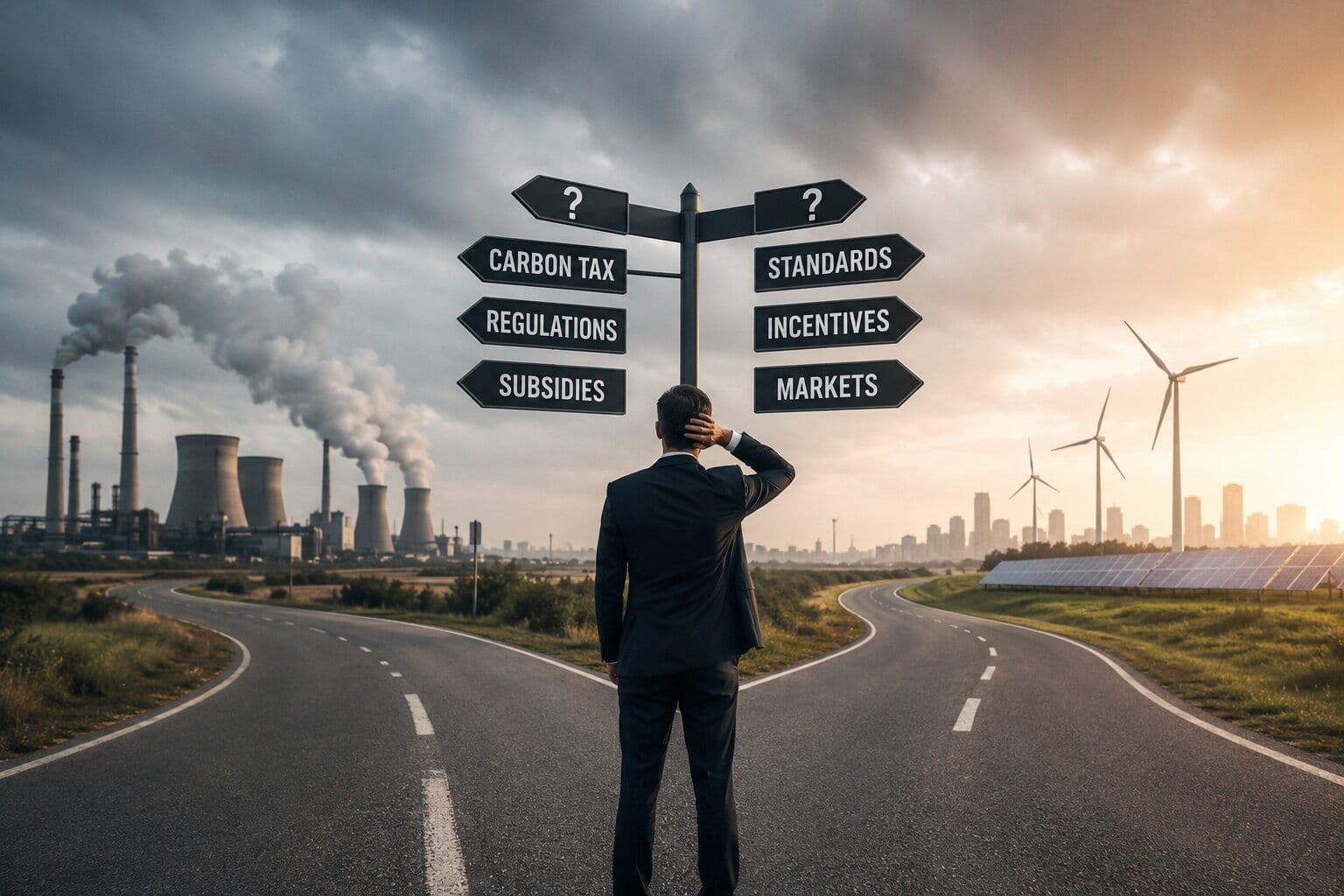
The Institute for Democracy and Economic Affairs (Ideas), Malaysia's first think tank dedicated to promoting market-based solutions to public policy challenges, has pushed for phased carbon pricing to slash emissions from steel production in the country.
Ideas has recently released a report which recommends the introduction of a carbon price to decarbonise the steel industry.
According to them, a carbon price of RM200 per tonne of carbon dioxide (CO₂) is the apt threshold to make low-carbon steel technologies financially competitive.
Also, it suggests a phased carbon pricing system instead of jumping straight to RM200, so as to gradually increase the tax until it reaches this level by 2030.
Read More: Asia’s Heavy Industry Unites for Cross-Border Carbon Capture Drive
The proposal is also in line with the nation’s plan to levy a carbon tax on high-emitting industries, including iron, steel, and energy, starting this year. This tax is aimed at reducing Malaysia’s carbon emissions as well as achieving its climate targets.
The impact of such pricing would differ. For instance, for steelmakers using blast furnaces, which is a high-emission method, production costs could go up by 11%. On the other side, downstream industries such as construction, which also use a lot of steel, could see costs increasing by 3.5% to 4.6%. In the meantime, high-value steel producers would see a much smaller uptick of about 1%.
Nevertheless, this carbon price is beneficial for the government, generating RM3 billion annually in revenue. The money could be reinvested to support steel producers and consumers in adjusting, which, in turn, supports the country’s transition to cleaner technologies and protects its economic competitiveness.
The actual reason for this push is the European Union’s Carbon Border Adjustment Mechanism (CBAM), which places a carbon tariff on imports of carbon-intensive products like steel. Without a carbon pricing system of its own, Malaysia's steel exports to the EU could become more expensive, subsequently making them less competitive.
If the country introduces a domestic carbon tax, it can buffer its steel exports and prepare for a low-carbon global market.
Also Read: Carbon Capture Market Forecast: Policy Shifts Fuel Global Growth
However, the problem is that its steel industry has shifted towards more polluting methods. In 2014, production was mostly using low-emission electric furnaces. But today, around 70% of production uses blast furnaces, which quadruple the sector’s emissions intensity. This makes it acutely harder for Malaysia to reach its net zero goals and also exposes the industry to trade risks.
Ideas senior fellow Renato Lima de Oliveira said the country requires a sufficiently high carbon price.
He said, “It could open the door for new technologies, reduce exposure to emerging trade restrictions, and secure access to markets that are moving quickly to decarbonise.”
Ends/
Looking to grow your sustainable operations with expert guidance? Tap into a broad network of ESG and sustainability service providers offering a wide range of green solutions.
Stay informed with KnowESG’s Social and Governance coverage for the latest updates and insights.
Don’t miss our updated ESG Online Courses—see what's new.
Source: The Edge
Get the ESG Brief in your inbox
One concise email a week — the ratings moves, regulation deadlines, and vetted solutions that matter. Trusted by sustainability and finance teams.
No spam · unsubscribe anytime.