Carlsberg Strengthens Climate Goals With Updated Brewing Tomorrow ESG Programme

Takeaways
- Carlsberg Group has updated its Brewing Tomorrow ESG program, raising climate ambitions while adapting to a larger beverage portfolio after acquiring Britvic.
- The brewer has aligned its emissions targets with the Science Based Targets initiative and reaffirmed its goal of achieving net zero across its value chain by 2040.
- The updated strategy expands commitments on renewable energy, recycled packaging, regenerative agriculture, and healthier beverage choices.
Carlsberg Group has launched an updated version of its global Environmental, Social and Governance strategy, Brewing Tomorrow, raising its climate ambitions while adjusting its sustainability roadmap to reflect a significantly expanded beverage portfolio.
The revised program follows Carlsberg’s 2025 acquisition of Britvic, the second-largest deal in the brewer’s history. The acquisition broadened the company’s geographic reach and increased the share of soft drinks in its portfolio to around 30 percent. However, it also added nearly 1 million tonnes of CO₂ equivalent emissions to Carlsberg’s value chain, an increase of roughly 16 percent.
Executives say the refreshed ESG framework is designed to address these changes while maintaining the company’s long-term commitment to achieving net zero emissions across its entire value chain by 2040.
Read More: ESG Performance Explained: Metrics, Frameworks & Measurement
“Carlsberg is on an exciting journey. We are evolving as a company, with a broader portfolio and a wider geographic presence. Brewing Tomorrow is our sustainability road map of action, built on strong performance in recent years. The aim is clear: to drive impact and ensure Carlsberg is a future-ready business,” said CEO Jacob Aarup-Andersen.
A Clearer Structure With Stronger Climate Targets
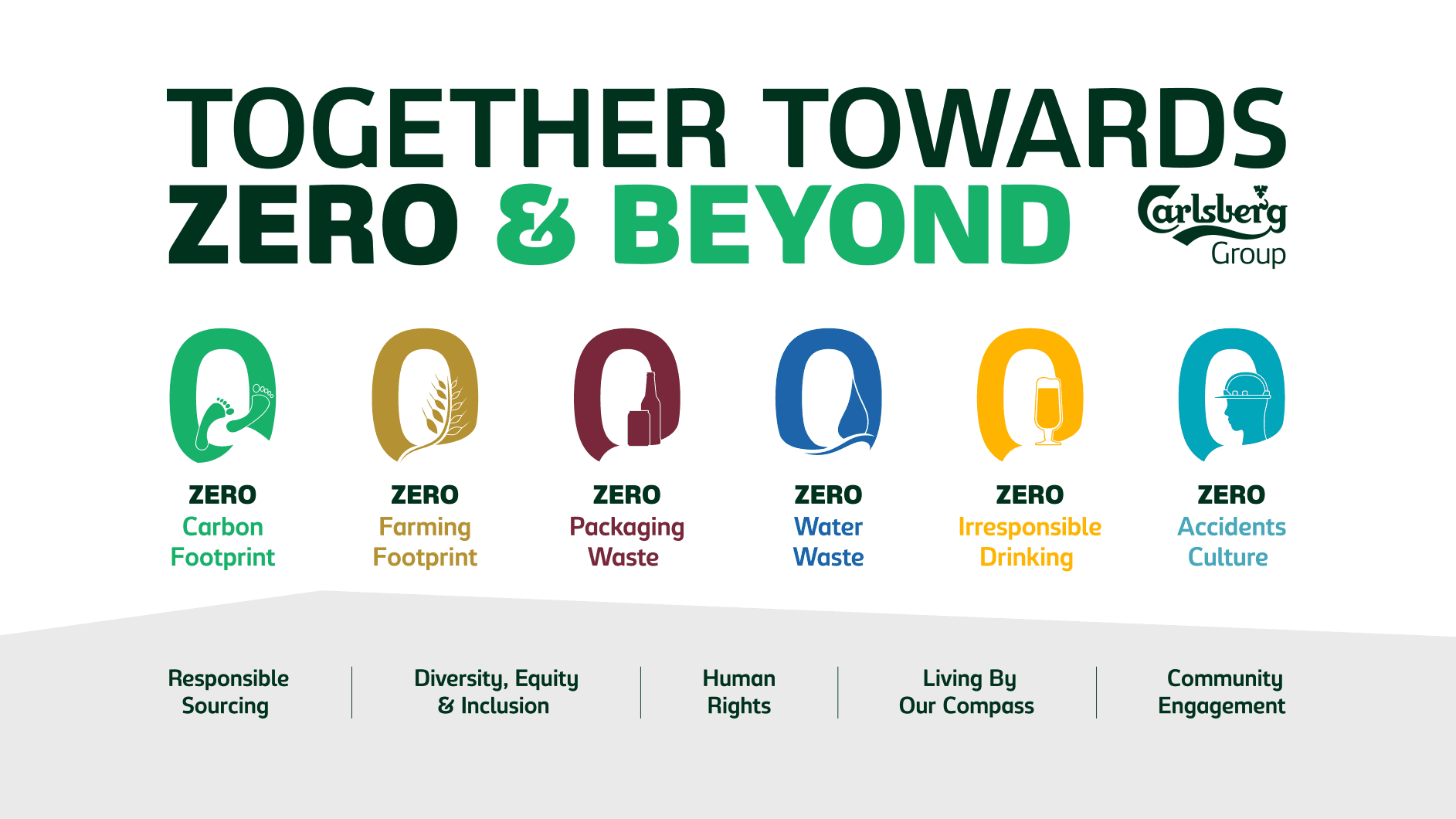
The updated strategy is structured around four pillars: Cutting Carbon, Protecting Nature, Empowering People, and Inspiring Choice. The framework aims to simplify the company’s sustainability efforts while strengthening targets related to climate, resource use, and workforce development.
One of the most notable changes is a stronger focus on absolute emissions reductions across Scope 1, Scope 2, and Scope 3 emissions. Carlsberg has aligned its new climate targets with the Science Based Targets initiative, a widely recognized benchmark for corporate decarbonization.
Because the Britvic acquisition expanded the company’s emissions footprint, some milestone targets have shifted from 2030 to 2032. Despite the revised timeline, Carlsberg reiterated that its overall goal of reaching net zero by 2040 remains unchanged.
Beyond emissions reductions, the program introduces new commitments to regenerative agriculture, greater use of recycled materials, and additional sugar reduction targets to reflect the company’s growing soft drink portfolio.
Operational Gains in Energy, Packaging, and Water
The updated roadmap builds on several recent sustainability achievements.
Since 2024, Carlsberg has cut absolute emissions at production facilities by 12 percent and reduced value chain emissions by 8 percent in the near term. Renewable electricity now accounts for 90 percent of the company’s power consumption.
The brewer has also increased its reliance on newly developed renewable energy sources. In 2025, it signed power purchase agreements in Norway, Finland, and Sweden, raising the share of electricity from new renewable assets to 19 percent, compared with just 6 percent a year earlier.
Decarbonization efforts have also expanded in emerging markets. A biomass energy facility in Laos now supplies more than 80 percent of the steam used by Vientiane Brewery, replacing fossil fuels and cutting annual emissions by about 15,000 tonnes of CO₂e.
Meanwhile, progress in circular packaging has exceeded expectations. Recycled materials now account for 51 percent of bottles and cans, allowing the company to surpass its 2030 target of 50 percent recycled content five years early.
Water stewardship has also improved. Carlsberg replenished 32 percent of water used in high-risk regions, doubling the previous year’s level.
Expanding Social and Consumer Commitments
The updated ESG program also strengthens social and consumer-focused goals.
Under the Inspiring Choice pillar, Carlsberg plans to expand its range of no- and low-alcohol beverages, which already represent 31 percent of brews sold globally. The company also aims to improve product transparency and consumer information.
The Empowering People pillar introduces new targets related to workplace inclusion while continuing efforts to increase gender representation in leadership. Women now hold 34 percent of senior leadership roles, up from 30 percent in 2024.
Also Read: The Growing Need for ESG Companies, Sustainability, and Climate Solutions
A Strategic Shift in the Beverage Industry
Carlsberg’s updated roadmap reflects a broader trend across the beverage industry. As supply chains become more complex and regulators demand greater transparency, ESG strategies are increasingly integrated into core business planning.
The company’s first consolidated Climate Transition Plan accompanies the program, outlining the steps needed to achieve its net-zero target by 2040.
For global brewers and beverage companies, the message is becoming clear: Climate action is no longer a side initiative but a central part of how companies manage growth, risk, and long-term competitiveness.
Follow more news and views via our Social & Governance and Featured Articles sections, and stay updated on the top ESG events to attend in 2026 for industry insights and networking.
If you're looking for suitable ESG and Sustainability providers to share customized solutions specific to your business needs, you can check out KnowESG's Solutions page.
If you are an ESG provider looking to get your organization listed on our portal, visit this page.
Source