Carbon Capture Policy Stress-Test: What Denmark’s CCS Tender Revealed

Takeaways
- Denmark’s €4 billion carbon capture and storage (CCS) tender drew just one firm bidder, exposing real-world project risks.
- The outcome highlights gaps in CCS policy design, timelines, and storage access rather than a lack of industry interest.
- The process delivered valuable lessons that could strengthen future climate policy and decarbonization efforts across Europe.
At first glance, Denmark’s flagship carbon capture policy looked like it had stalled.
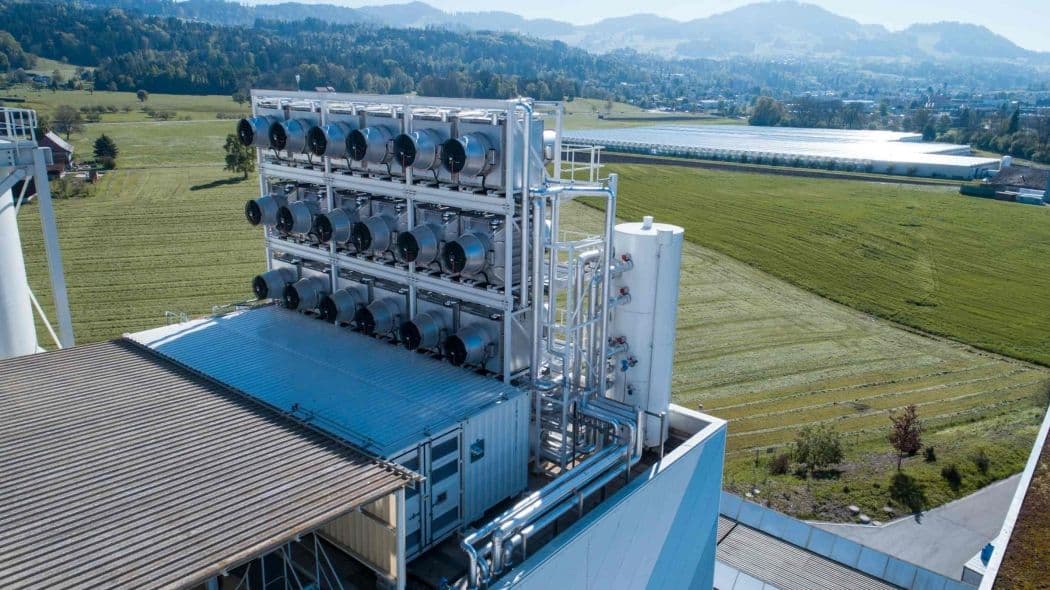
A €4 billion government-backed carbon capture and storage (CCS) subsidy scheme, designed to kick-start a competitive market, ended with nearly all bidders walking away. Out of ten pre-qualified applicants, nine withdrew. Only one confirmed bidder remained, with another submitting a last-minute offer. The program is now unlikely to meet its original capacity target.
Headlines quickly labeled it a failure.
But officials and analysts say the outcome tells a different story. Rather than a collapse, Denmark may have just conducted one of the most honest stress tests of CCS policy yet.
Read More: Carbon Capture Market Forecast: Policy Shifts Fuel Global Growth
Big Ambition, Tough Reality
Denmark’s plan was bold. The government committed 28.7 billion Danish kroner (around €3.9 billion) to support projects that could capture and store 2.3 million tonnes of CO₂ annually between 2029 and 2044.
For a country of Denmark’s size, that is a significant share of national emissions and a serious step toward industrial decarbonization.
Early signals were promising. Sixteen companies applied, and ten were shortlisted. On paper, it looked like the birth of a competitive CCS market.
Then reality set in.
Why Bidders Dropped Out
By early 2026, most developers had exited. The reasons were practical rather than political.
First, timelines proved too tight. Carbon capture projects require years of planning, permitting, storage approvals, and financing. The tender’s schedule was aligned more with 2030 climate targets than with engineering realities.
Second, storage access was limited. Denmark has offshore potential, but licensed, bankable storage sites remain scarce. Without guaranteed storage, capture facilities cannot secure funding.
Risk allocation also discouraged participation. Strict penalties for delays, many outside developers’ control, made projects financially risky. Add to that a price cap that limited cost recovery, and many firms concluded the numbers simply did not work.
In short, the market was not rejecting CCS technology. It was rejecting an unmanageable risk.
Why the Remaining Bid Matters
The surviving known project comes from Aalborg Portland, a major cement producer. That detail is important.
Cement is one of the hardest sectors to decarbonize. Much of its emissions come from chemical processes that cannot be eliminated through electrification alone. For this industry, carbon capture is often the only viable path to deep emissions cuts.
If the Aalborg project moves forward, it could capture up to 1.5 million tonnes of CO₂ annually, enough to reduce Denmark’s emissions by several percentage points.
That is far from marginal.
Lessons Beyond Denmark
Experts say Denmark’s experience offers a roadmap for better CCS deployment worldwide.
Future tenders may need more realistic timelines, shared risk structures, flexible pricing, and earlier investment in storage infrastructure. Governments may also need to accept that early projects prioritize learning over competition.
That learning could prove invaluable as Europe accelerates climate policy and net-zero commitments.
Also Read: EU Financial Regulators Issue New ESG Stress Testing Guidelines
What Happens Next
Denmark now faces a choice: award funding to the remaining bidders or redesign and re-tender with improved terms. Either route could succeed if it incorporates the lessons learned.
What matters most is momentum.
In the end, Denmark may not have failed at carbon capture policy. It simply tested it under real conditions and discovered what needs fixing before scaling up.
For a first-of-a-kind program, that may be exactly the point.
Follow more news and views via our Sustainable Finance & Technology and Featured Articles sections, and stay updated on the top ESG events to attend in 2026 for industry insights and networking.
If you're looking for suitable ESG and Sustainability providers to share customized solutions specific to your business needs, you can check out KnowESG's Solutions page.
If you are an ESG provider seeking to list your organization on our portal, please visit this page.
Source: OILPRICE.com