Fibre Cement Recycling Project Pares Emissions in EU

Highlights
- CEMLOOP XL employs fibre cement recycling to produce low-carbon cement, which reduces CO₂ emissions by 20%.
- Etex and Heidelberg Materials Benelux are building a closed-loop system backed by EU LIFE Programme funding.
- The project transforms fibre cement waste into a circular raw material, thereby saving limestone and cutting energy use by 15%.
Etex and Heidelberg Materials Benelux have announced a partnership through the CEMLOOP XL project, an industrial-scale initiative co-funded by the European Union LIFE Programme, to revamp fibre cement recycling in Europe.
By combining their expertise, the companies are introducing a process that transforms waste from fibre cement products into a secondary raw material for low-carbon cement production. This innovation supports a more sustainable built environment, as well as cuts CO₂ emissions in cement production by at least 20% and reduces energy use by 15%.
The circular solution entails two complementary processes
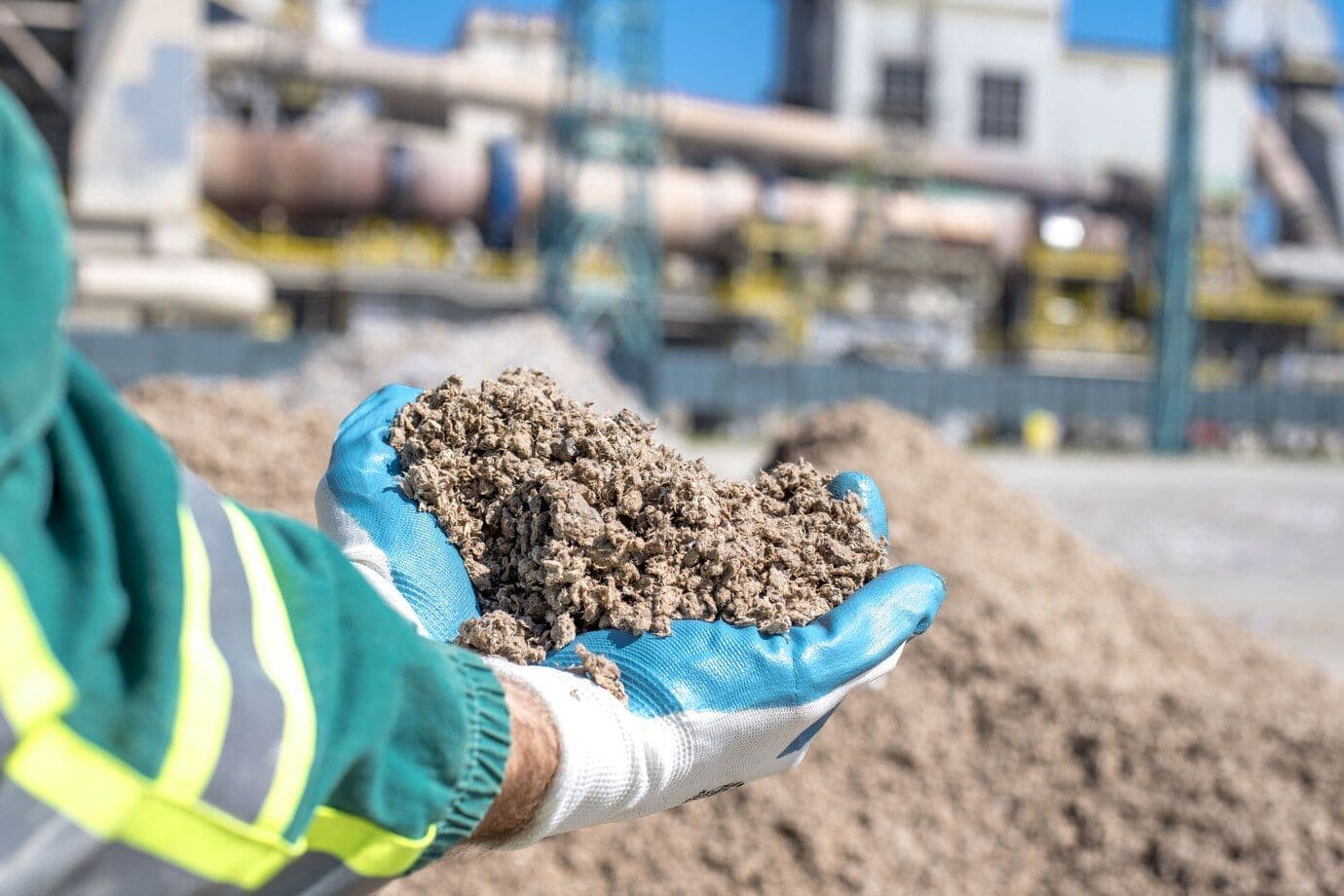
Etex, working with the Jacobs Group, is developing a method to process fibre cement waste from its production lines and the wider construction sector. The material is transformed into Recycled Fibre Cement Paste (RFCP), which can be reused instead of being sent to landfill.
To this end, a recycling facility is under construction in Hemiksem, Belgium, and its completion is scheduled for mid-2026.
Read More: Recycled Cement Cuts Emissions Without Strength Loss, Says Study
Heidelberg Materials is taking the next step at its Lixhe cement plant in Liège through the CCLIX process.
There, RFCP is exposed to CO₂ captured from kiln exhaust gases, which turns it into carbonated RFCP (cRFCP). This process restores its cementitious properties and allows the material to replace part of the clinker used in cement.
Serge Montagne, Technical Director Cement Operations, Heidelberg Materials Benelux, commented: “Pioneer on the path to carbon neutrality, Heidelberg Materials has long been committed to reducing its CO₂ emissions. One of its key levers is lowering the clinker content in its cement.
“To accelerate the shift toward more sustainable and environmentally friendly solutions, the company is actively working to diversify its sources of secondary cementitious materials. CEMLOOP XL is a significant step forward toward new generations of cements, making the construction materials more sustainable and responsible.”
A specialised carbonation reactor will be commissioned by the end of 2028 to scale up this development.
Tangible environmental results
Each year, the process will prevent 60,000 tonnes of fibre cement waste from going to landfill and save 100,000 tonnes of raw limestone. It also enables new fibre cement products to contain more than 20% recycled content with a 15% lower carbon footprint.
Each tonne of RFCP will capture or avoid around 900 kg of CO₂, thereby locking the gas into the material permanently. This acts as a CO₂ sink, in line with EU regulations.
Also Read: Boral Advances CO₂ Capture with Recycled Concrete in Low-Carbon Mix
Eric Bertrand, Chief Innovation Officer at Etex, said: “At Etex, circularity is a part of how we innovate. By 2030, we aim for over 20% of our inputs to come from circular sources and aim to send zero waste to landfill.
“Fibre cement plays a central role in this transformation. For the first time, it will follow a fully circular journey. This is only possible thanks to strong partnerships such as Heidelberg Materials, creating an ecosystem where innovation and circularity go hand in hand.”
Ends/
Ready to build a greener business model? Browse our ESG Marketplace featuring 800+ specialised providers worldwide.
Get the freshest insights in Sustainable Finance and Technology News now.
See what’s trending in ESG events right now.
Source: Etex