ESG Reporting Software: Features You Need vs. Features You Don’t

Environmental, social, and governance (ESG) reporting has become a steady requirement for organizations of all sizes. With growing scrutiny from regulators, investors, lenders, and customers, many companies are turning to ESG reporting software to manage ESG data, produce disclosures, and track progress in a structured way. Yet the market is crowded with platforms offering long lists of tools, modules, and dashboards—some genuinely useful, others unnecessary for many organizations.
This guide breaks down ESG reporting software into two categories: features you genuinely need for reliable corporate sustainability reporting and those you don’t in many situations. The aim is simple: to help you evaluate software with confidence, avoid overspending, and focus on functions that match your ESG strategy and reporting goals.
What ESG reporting software actually does
ESG software brings together environmental social and governance information from different parts of an organization and turns it into structured reports. These reports can follow various reporting frameworks such as GRI, SASB, CSRD, or TCFD, or support voluntary disclosures to stakeholders.
Featured Article: ESG Compliance Software: Ensure Regulatory Compliance with Confidence
In simple terms, ESG reporting solutions act as a central hub where:
- ESG data collection from multiple systems can be consolidated
- Data accuracy is validated and checked
- Teams across finance, sustainability, HR, and audit collaborate seamlessly
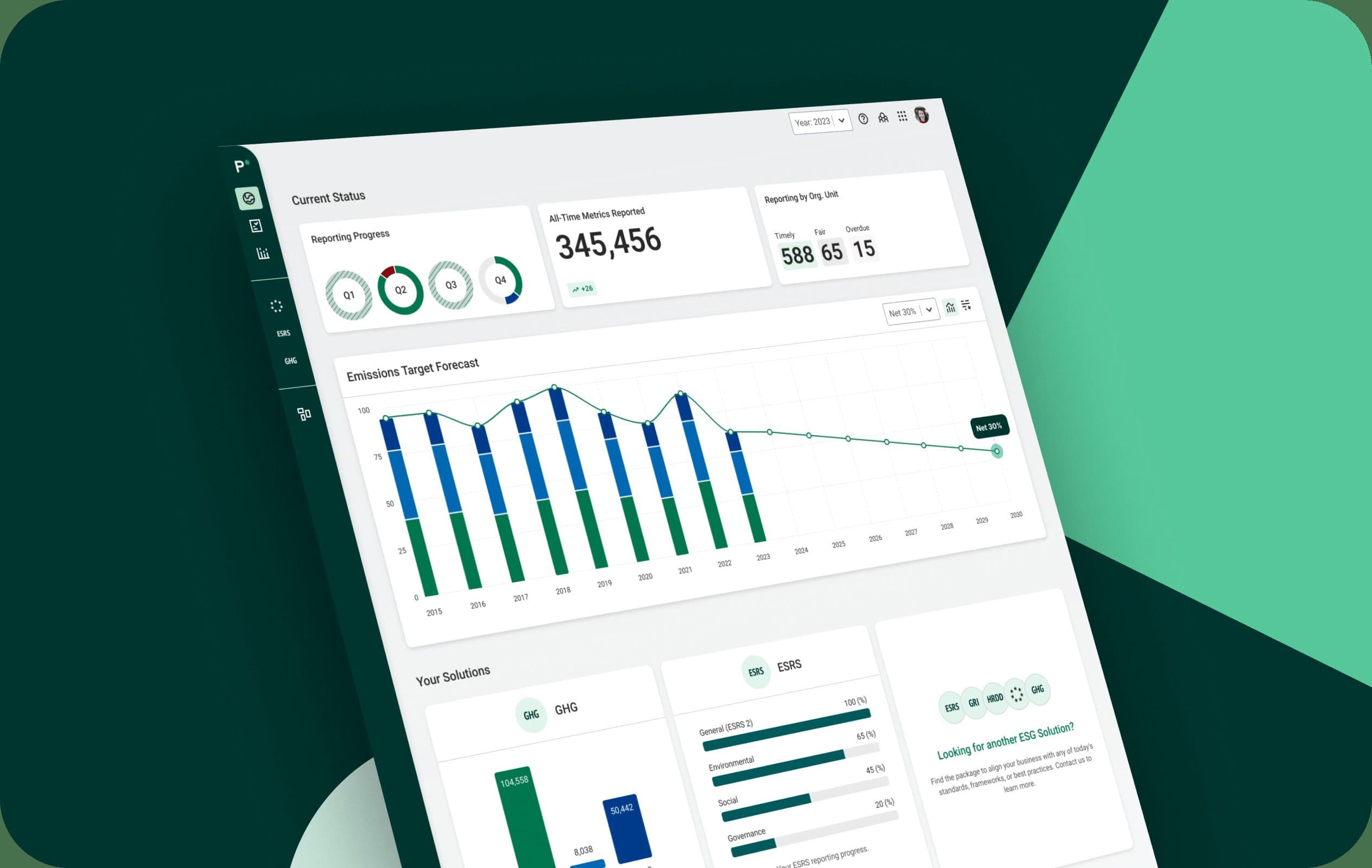
- Dashboards visualize trends, risk management, and ESG metrics
- Reports are generated in formats used by regulators, investors, and auditors
Instead of spreadsheets scattered across shared folders, ESG software options streamline the reporting process, as well as provide a repeatable workflow year after year. Because organizations track environmental and social topics in many different systems—HR tools, finance systems, utility bills, procurement systems, and supplier platforms—a cloud-based platform makes it easier to bring everything together and track progress toward sustainability goals.
Why organizations rely on ESG reporting software
Companies adopt ESG reporting platforms for several key reasons:
- To gather information from multiple departments in one place (data aggregation)
- To improve data quality and reduce human error through built-in validation
- To produce disclosures in recognized formats under corporate governance or corporate sustainability frameworks
- To provide dashboards that highlight sustainability performance
- To organize structured reporting workflows for annual or quarterly cycles
Spreadsheets often create friction when data must be checked by finance, legal, sustainability, internal audit, and external advisers. ESG reporting capabilities within software offer repeatability, supporting long-term sustainability management and actionable insights by keeping historical figures connected to dashboards.
Features you need in ESG reporting software
1. Automated data gathering across systems
A core requirement for any ESG reporting software is the ability to bring ESG data together from multiple sources. Many organizations collect environmental information from utility bills, facility meters, procurement systems, and energy suppliers. Social and governance topics come from HR systems, payroll, ethics hotlines, board records, and related tools.
Automation reduces manual work, improves data accuracy, and supports repeatable reporting processes—a cornerstone of sustainability reporting.
Featured Article: What is Sustainability Reporting? Meaning, Types, and Benefits
2. Data validation and consistency checks
Data quality is critical for corporate sustainability reporting. ESG information often comes from many teams, and each department may use different units or formats. Reliable checks prevent errors, duplicate entries, or missing values, providing transparency for internal reviews.
ESG software can offer:
- Automated prompts when information is missing
- Notifications when numbers fall outside normal ranges
- Unit conversions
- Consistency controls across sites or regions
These features support regulatory compliance and ESG compliance for both voluntary and mandated disclosures.
→ Compare all vendors side-by-side with our interactive tool
3. Disclosure management for frameworks
Most organizations report ESG information under one or more reporting frameworks, such as GRI, SASB, CSRD, or TCFD. ESG reporting solutions provide templates for these frameworks, version control, and a central ESG platform for producing reports efficiently.
4. Dashboards for internal monitoring
Dashboards offer an actionable insights view of sustainability performance. They allow teams to track trends in emissions management, HR metrics, governance measures, and other ESG factors. Dashboards enable data-driven decisions while improving transparency across departments.
5. Collaboration and workflow structure
A strong ESG reporting platform manages team collaboration with:
- User roles and permissions
- Workspace areas for finance, sustainability, HR, and audit teams
- Step-by-step reporting process management
- Approval tracking and historical records
This streamlined reporting approach ensures accountability, data management, and consistent ESG reporting capabilities.
6. Scalability and flexibility
The best software scales with organizational growth. Modular features allow teams to add sustainability reporting elements gradually, including supplier dashboards, carbon accounting software, and Scope 3 tracking. Flexible systems reduce replacement costs while supporting long-term sustainability management.
7. Support for emissions management
Many organizations use ESG platforms to manage carbon accounting and greenhouse gas reporting. Key functions include:
- Scope 1 and Scope 2 calculations
- Supplier uploads for Scope 3 emissions
- Facility-level energy and emissions analysis
These modules integrate with financial reporting, corporate governance, and broader ESG strategy metrics.
Features you may not need
Certain advanced features are unnecessary for smaller organizations or those in early-stage ESG reporting:
- Highly advanced prediction modules
- Fully customizable dashboards
- Extensive third-party integrations
- Deep supply chain engagement tools
- Broad narrative-writing suites
- Specialist industry modules

💡 Not sure which platform is right for you? Calculate your ROI with our interactive tool to see potential savings and payback period.
Compliance considerations
ESG reporting software also supports regulatory requirements and corporate sustainability reporting directive compliance with:
- Framework-ready templates (CSRD, GRI, SASB, TCFD)
- Audit trails and version control
- iXBRL-ready outputs
- Historical data review
A comprehensive reporting approach ensures organizations maintain accuracy and data integrity over time.
Use cases
- Finance-led teams rely on ESG software to mirror financial cycles and generate financial reporting-aligned disclosures.
- Sustainability teams use dashboards to manage sustainability targets and supplier sustainability data.
- Investors and asset managers track private markets, Scope 3 emissions, and stewardship activity.
- Small businesses benefit from streamlined reporting, CSV uploads, and basic dashboards.
Featured Article: What is ESG Software? Complete Beginner's Guide for Finance Teams
Conclusion
ESG reporting software is important for corporate sustainability and provides tools to manage ESG data, ensure data quality, and produce accurate disclosures. The right platform balances automation, dashboards, workflow structure, and compliance support. By separating features you need from those you may never use, organizations can maintain sustainability performance, strengthen ESG reporting capabilities, and achieve a clear view of ESG goals.
Frequently Asked Questions (FAQs)
What is the best ESG reporting software?
There is no single best software. Popular options include Workiva, Enablon, Sphera, and Diligent, depending on company size and reporting needs. However, if you would like to explore more options, find the best ESG and sustainability solution for your business here.
What is ESG software?
ESG software collects and tracks environmental, social, and governance information. It helps companies prepare reports for regulators, investors, and stakeholders.
What are the big 4 of ESG?
The big 4 refers to Deloitte, PwC, EY, and KPMG, which provide ESG advisory, reporting, and assurance services.
What does ESG stand for in SAP?
In SAP, ESG means Environmental, Social, and Governance, used in tools for sustainability and corporate responsibility.
What is the best ESG software?
Similar to Q1, top choices include Workiva, Enablon, Sphera, and Diligent, depending on reporting requirements.
What is currently the most widely used ESG reporting framework?
The Global Reporting Initiative (GRI) is widely used. Other frameworks include SASB, TCFD, and ISSB standards.
Does Bloomberg have ESG data?
Yes, Bloomberg tracks company information on carbon emissions, diversity, and governance practices.
What is ESG reporting software?
ESG reporting software collects, analyses, and creates reports on environmental, social, and governance data.
What is an ESG platform?
An ESG platform combines data collection, management, and reporting in a single system for easier ESG tracking.
What is the ESG reporting system?
The ESG reporting system gathers data on company practices, checks performance, and generates reports for stakeholders.
What is an ESG reporting tool?
An ESG reporting tool tracks ESG metrics and produces reports for investors, regulators, or internal review.
What are the 4 pillars of ESG?
The pillars are Environmental (climate, energy), Social (employees, community), Governance (board, ethics), and sometimes Risk or Strategy.
What is an ESG solution?
An ESG solution combines software, processes, and guidance for managing ESG data and reports.
How is ESG reporting done?
Companies collect environmental, social, and governance data, analyze performance, and produce reports using frameworks like GRI, SASB, or TCFD.
Get the ESG Brief in your inbox
One concise email a week — the ratings moves, regulation deadlines, and vetted solutions that matter. Trusted by sustainability and finance teams.
No spam · unsubscribe anytime.