Sustainable Aviation Fuel Market Poised to Hit US$ 74.20 Billion by 2032

Takeaways
- The sustainable aviation fuel market is projected to grow from USD 1.40 billion in 2024 to USD 74.20 billion by 2032, driven by aviation decarbonization goals.
- Biofuels and HEFA-SPK technology currently dominate the market, while new fuel pathways are gaining momentum.
- North America leads global adoption due to strong policy support and airline commitments.
The global sustainable aviation fuel market is set for explosive growth over the next decade, according to a new report by Stratview Research. The market is expected to expand from an estimated USD 1.40 billion in 2024 to USD 74.20 billion by 2032, registering a robust compound annual growth rate (CAGR) of 64.2% between 2025 and 2032.
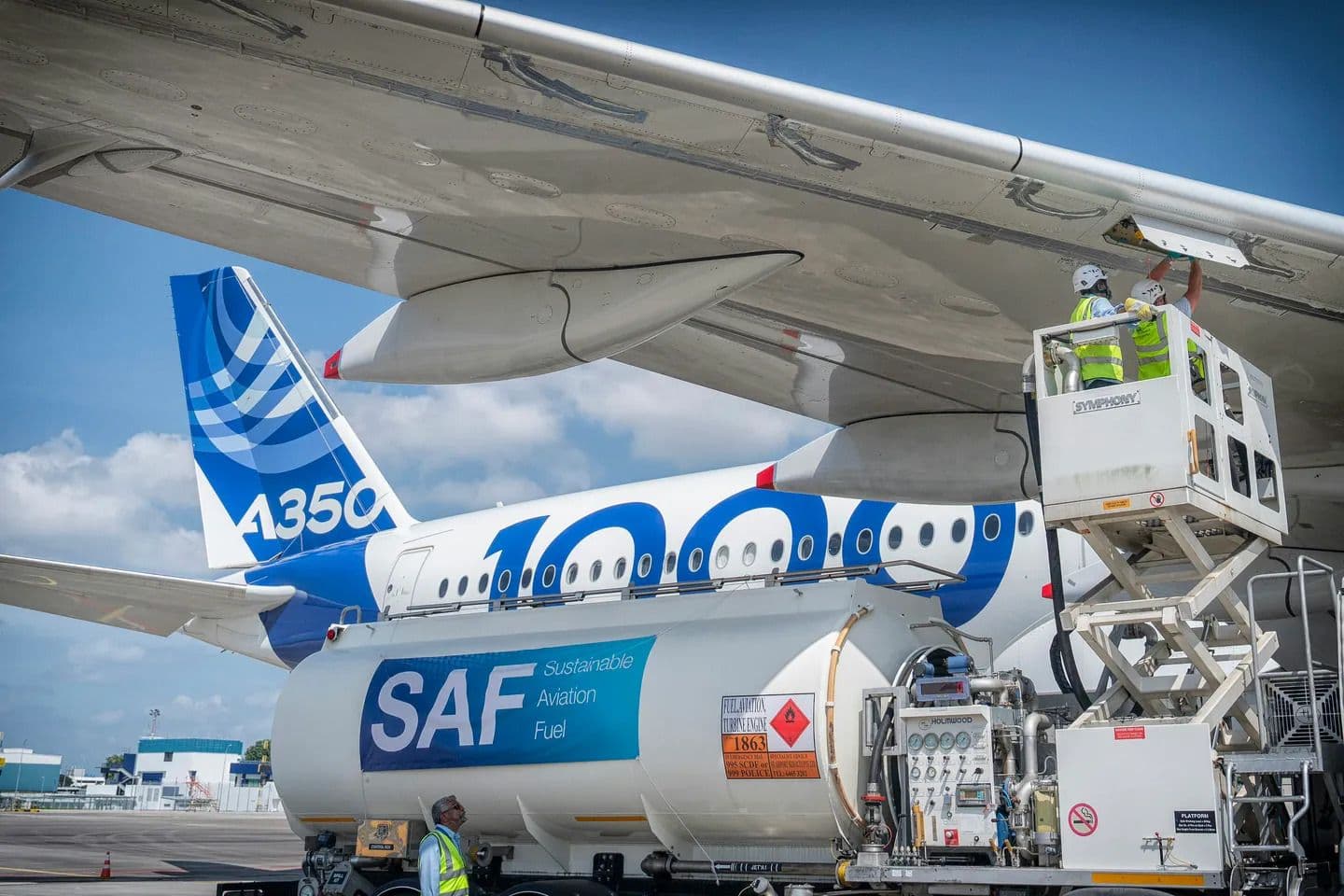
Sustainable aviation fuel, commonly known as SAF, is produced from renewable and waste-based feedstocks such as used cooking oil and agricultural residues. These fuels can significantly reduce lifecycle greenhouse gas emissions while remaining compatible with existing aircraft engines and airport fueling infrastructure. As the aviation sector faces mounting pressure to cut emissions, SAF is increasingly seen as the most viable near-term solution.
Stratview Research notes that global aviation decarbonization commitments are the primary driver of market growth. Airlines, aircraft manufacturers, and regulators have pledged net-zero targets, pushing the industry to scale up SAF adoption. Long-term offtake agreements between fuel producers and airlines are further strengthening demand visibility.
Read More: Fiji Airways Partners for Sustainable Aviation Fuel
The report provides a detailed breakdown of the market across fuel type, technology, aircraft type, platform, and region. Among fuel types, biofuel currently dominates the market due to its technological maturity, wide feedstock availability, and established certification for commercial aviation. It is also the fastest-growing segment, supported by government mandates and growing investment in bio-based SAF facilities.
In terms of technology, HEFA-SPK remains the leading pathway, benefiting from commercial-scale production and regulatory approval. However, FT-SPK technology is expected to witness the fastest growth, driven by its ability to use diverse feedstocks and its potential for cost reductions through innovation.
By aircraft type, fixed-wing aircraft account for the largest share of SAF consumption, reflecting the dominance of commercial aviation. Meanwhile, the rotorcraft segment is emerging as the fastest-growing category as sustainability efforts expand into helicopter operations and specialized aviation services.
From a platform perspective, commercial aviation leads the market, supported by rising global passenger traffic and airlines’ long-term commitments to reduce carbon emissions. Stratview Research highlights growing opportunities for multi-year SAF supply contracts between producers and major carriers.
Also Read: Global Carriers Unite in Fund to Expand Sustainable Jet Fuel Supply
Regionally, North America holds the largest share of the sustainable aviation fuel market. Early policy support, tax credits, blending mandates, and strong airline participation have created a favorable environment for SAF production and deployment. These factors have encouraged capacity expansion and strategic partnerships across the value chain.
Key players operating in the market include Neste, Shell, TotalEnergies, World Energy, and Lanzatech, among others, all of whom are investing heavily to scale production and diversify fuel pathways.
Follow more news and views via our Sustainable Finance & Technology and Featured Articles sections, and stay updated on the top ESG events to attend in 2026 for industry insights and networking.
If you're looking for suitable ESG and Sustainability providers to share customized solutions specific to your business needs, you can check out KnowESG's Solutions page.
If you are an ESG provider looking to get your organization listed on our portal, visit this page.
Source: openPR