Moisture-Driven Direct Air Capture Could Boost CO₂ Removal Efficiency

Takeaways
- Researchers have studied moisture-powered materials that can capture and release carbon dioxide using humidity changes.
- The study shows that pore size and material structure play a key role in improving carbon dioxide removal efficiency.
- The findings could help develop more energy-efficient direct air capture technology for tackling rising atmospheric CO₂ levels.
Rising levels of atmospheric carbon dioxide have become one of the biggest drivers of climate change. Over the past century, increasing CO₂ concentrations have contributed to shifting weather patterns, rising temperatures, and more frequent droughts across the globe.
Now, researchers have taken a step toward improving carbon capture technology by studying materials that can remove carbon dioxide from the air using changes in humidity.
A research team led by Professor Petra Fromme at Arizona State University has examined how certain CO₂ capture materials behave in a process known as moisture-driven direct air capture. The findings suggest that humidity-powered systems could make removing carbon dioxide from the atmosphere more efficient and potentially less energy-intensive.
Studying Moisture-Driven Carbon Capture
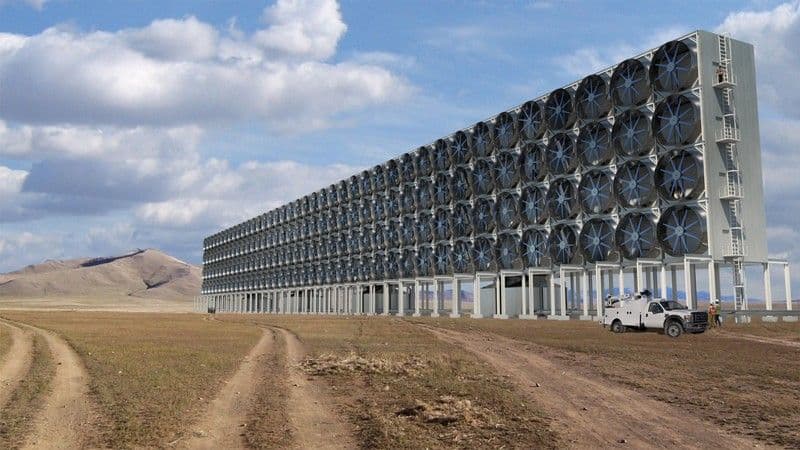
Direct air capture technology involves removing carbon dioxide directly from ambient air and storing it permanently. When combined with long-term storage methods, it is seen as a promising tool for reducing greenhouse gases already present in the atmosphere.
However, many existing carbon capture systems require large amounts of energy to operate. Moisture-driven systems offer a potential alternative because they rely on changes in humidity rather than heat or high pressure.
In the new study, researchers examined two commercially available polymers, Fumasep FAA-3 and IRA-900, to understand how well they work in moisture-driven direct air capture systems.
The team wanted to determine how the structure of these CO₂ capture materials affects their ability to adsorb carbon dioxide when the air is dry and release it when humidity increases.
“Our research addresses the urgent challenge of removing carbon dioxide from the atmosphere by investigating materials for low-energy, moisture-driven direct air capture,” said Gayathri Yogaganeshan, a doctoral student involved in the research.
Read More: Global Airlines Invest in Direct Air CO2 Removal Technology
Advanced Imaging Reveals Material Behavior
To study how the materials function, the researchers used a combination of advanced techniques, including X-ray diffraction, electron microscopy, and atomic force microscopy.
These methods allowed the team to examine the materials at multiple scales, from their microscopic structure to their larger physical features.
The researchers also conducted experiments to measure how much water and carbon dioxide the materials could absorb and release under different humidity conditions.
The results showed that both polymers behaved similarly when interacting with water, indicating that water movement is largely influenced by their molecular structure.
However, the materials differed in their ability to capture carbon dioxide.
Pore Size Makes a Difference
One key factor was pore size. The material with larger pores, IRA-900, captured more carbon dioxide and absorbed it more quickly than the other polymer.
Further imaging revealed structural characteristics such as pores, clustering, and swelling that help explain why some materials perform better than others in carbon dioxide removal.
These findings highlight how material design can influence the effectiveness of low-energy carbon capture methods.
Toward More Efficient Carbon Removal
The research provides new insight into how humidity-based direct air capture technology works and why moisture plays such an important role in the process.
According to the researchers, understanding these mechanisms could help scientists design improved carbon capture technology that requires less energy and can operate at larger scales.
Also Read: Breakthrough Air Filter Could Make Every Building a Carbon Sink
Such innovations could become an important part of global efforts to remove excess atmospheric carbon dioxide and limit future climate impacts.
Follow more news and views via our Sustainable Finance & Technology and Featured Articles sections, and stay updated on the top ESG events to attend in 2026 for industry insights and networking.
If you're looking for suitable ESG and Sustainability providers to share customized solutions specific to your business needs, you can check out KnowESG's Solutions page.
If you are an ESG provider looking to get your organization listed on our portal, visit this page.
Source: ASU News