Bayer, bp Expand Camelina Production To Meet Growing SAF Demand

Takeaways
- Bayer and bp have formed a long-term partnership to expand camelina production for renewable diesel, biodiesel, and sustainable aviation fuel markets.
- The companies aim to create new income opportunities for farmers while addressing the rising demand for low-carbon fuels.
- North America will serve as the launch market, with Bayer already rolling out its newgold™ camelina crop across parts of the United States and Canada.
Bayer and bp have announced a strategic partnership to scale camelina production in North America, targeting the growing renewable diesel and sustainable aviation fuel (SAF) markets.
The collaboration will commercialize camelina under Bayer’s newgold™ brand, with the crop expected to serve as a biofuel feedstock for biodiesel, renewable diesel, and SAF production. The move comes as global demand for low-carbon fuels continues to rise, especially in sectors such as aviation, shipping, rail, and heavy-duty transportation, where electrification remains difficult.
Under the partnership, bp will contribute its expertise in refining and fuel markets, while Bayer will focus on seed technology, crop development, and farmer engagement. Together, the companies aim to strengthen the renewable fuel market by building a more stable supply chain for intermediate oilseeds.
Read More: Delta Sustainability Push Accelerates with New Tech, Fuel Savings, and SAF Growth
Industry estimates suggest that demand for renewable diesel, biodiesel, and sustainable aviation fuel could nearly triple to 40 billion gallons by 2040. This rapid growth is increasing pressure on fuel producers to secure reliable and scalable feedstock supplies.
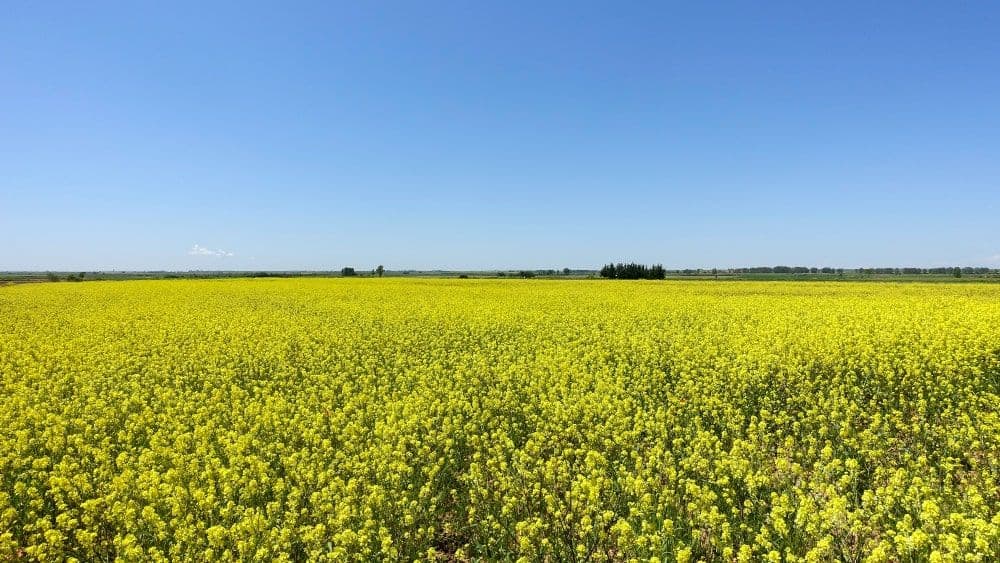
Camelina is emerging as a promising solution because of its flexibility for farmers. The crop can be grown between traditional planting seasons, integrated into crop rotations, or cultivated on idle and underused land. Bayer and bp believe this could create additional revenue opportunities for growers without competing directly with food crops.
Frank Terhorst, head of strategy and sustainability for Bayer’s Crop Science division, said the partnership is designed to provide farmers with greater market certainty while helping meet the needs of the expanding renewable fuel market.
Camelina’s agronomic characteristics are also attracting attention. The crop can grow in both winter and spring conditions and is known for drought tolerance, winter hardiness, and resistance to pod shatter. It also requires fewer agricultural inputs compared to several conventional crops, making it appealing from both economic and sustainability perspectives.
The companies are positioning the initiative as a response to ongoing concerns around land use and food competition linked to biofuel production. By focusing on fallow, marginal, and underutilized land, the alliance hopes to support lower-carbon fuel production without disrupting existing food supply systems.
The partnership follows Bayer’s acquisition of camelina assets earlier this year. Since then, the company has accelerated production efforts and begun testing both long-season and short-season crop varieties. Bayer has already introduced newgold™ camelina in the Northern Plains region of the United States as well as parts of Southern Saskatchewan and Southern Alberta in Canada.
For bp, the deal supports its broader strategy to secure alternative feedstocks for current and future refining operations. Philipp Schoelzel, senior vice president of biofuels growth at bp, said the collaboration combines the strengths of both companies to deliver products that meet customer demand while creating shareholder value.
Also Read: Study: Only 10 of 77 Airlines Pushing for SAF Adoption
Executives and investors will now be watching whether the partnership can successfully scale production and improve feedstock reliability for renewable fuels. Farmer adoption, policy support, certification standards, and lifecycle emissions tracking are expected to play major roles in determining the project’s long-term success.
If successful, the Bayer-bp model could provide a roadmap for expanding sustainable fuel feedstocks across other agricultural regions worldwide.
Follow more news and views via our Sustainable Finance & Technology and Featured Articles sections, and stay updated on the top ESG events to attend in 2026 for industry insights and networking.
If you're looking for suitable ESG and Sustainability providers to share customized solutions specific to your business needs, you can check out KnowESG's Solutions page.
If you are an ESG provider looking to get your organization listed on our portal, visit this page.
Source: ESG NEWS