MHI, Worley Deliver CO₂ Capture Facility at Padeswood Cement Works

Highlights
- MHI, Worley, and Heidelberg Materials UK progress with Europe’s first cement facility using the Advanced KM CDR Process™ at Padeswood.
- The aim is to capture around 800,000 tonnes of CO₂ annually, with emissions stored in depleted gas fields beneath Liverpool Bay through HyNet North West.
- The Padeswood CCS facility is planned for 2029, which brings new jobs, industrial investment, and a pathway to low-carbon cement production.
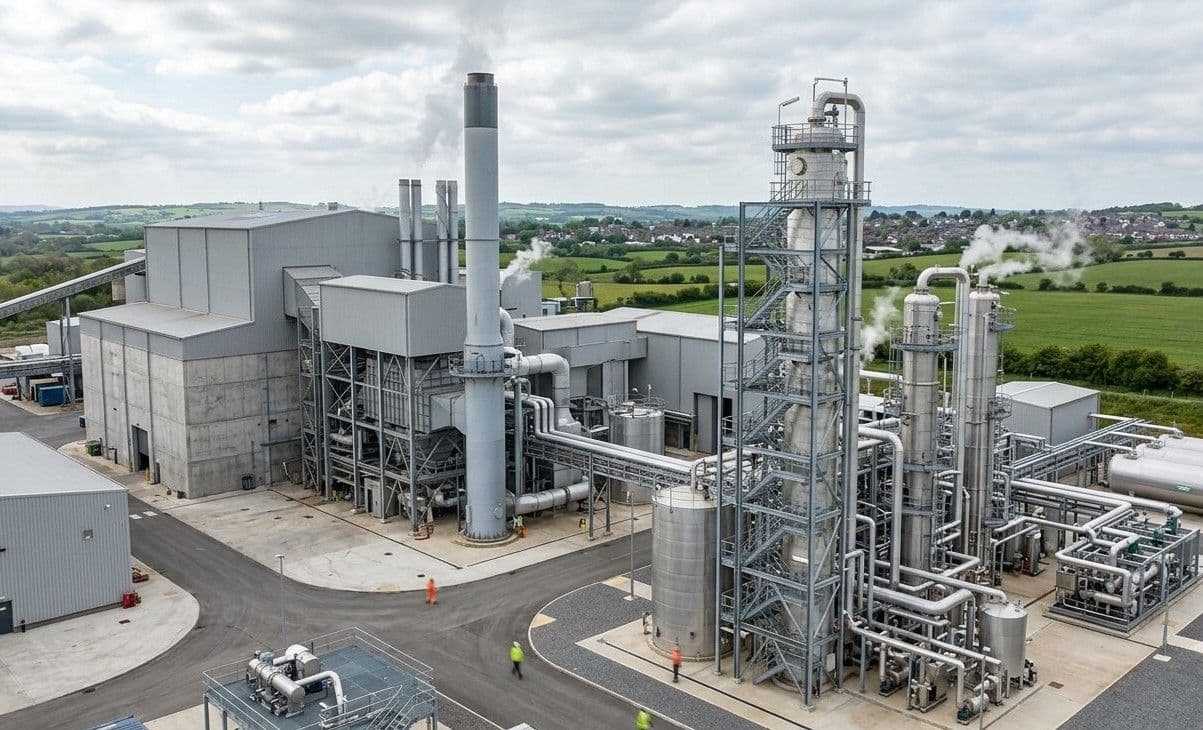
The Padeswood cement works in North Wales is moving into a new phase as Mitsubishi Heavy Industries, Ltd. (MHI), Worley, and Heidelberg Materials UK progress with a full-scale carbon capture facility.
The project brings MHI’s Advanced KM CDR Process™ to Europe for the first time, forming part of the HyNet North West cluster. Cement production produces large volumes of CO₂, largely from calcination, a chemical reaction central to cement manufacturing.
Read More: Linklaters Backs UK’s Net Zero Goals with Protos Carbon Capture Project
Use of Advanced KM CDR Process™ at Padeswood
The installation plans to process around 800,000 tonnes of CO₂ each year, sending the captured emissions through a pipeline to depleted gas fields beneath Liverpool Bay. This approach targets the part of cement operations where emissions originate from the chemistry of production rather than from fuel use.
As a result, the Padeswood CCS facility stands as a central piece of Heidelberg Materials UK's low-carbon cement strategy.
Engineering, Construction, and Project Timeline
MHI and Worley moved into the execution phase after Heidelberg Materials reached its final investment decision in 2025 under the UK Government’s Track-1 CCUS cluster programme.
MHI, supported by MHI-EMEA’s London office, is responsible for engineering and procurement linked to the Advanced KM CDR Process™, including compressors and other specialised systems.
Worley is responsible for engineering, procurement, and construction management for the balance of plant.
Also Read: What Is Carbon Capture & Storage? Technology, Benefits & Risks
Project Delivery Through FEED and Execution
The partnership builds on a front-end engineering design study completed in 2024, which shaped the technical scopes needed for full delivery. Construction activity is projected to create up to 500 jobs, with the completed facility projected to sustain around 50 new positions and protect around 200 roles at the Padeswood site. The CCS plant is planned to start operating in 2029.
HyNet North West Cluster and UK Net Zero Goals
The Padeswood CCS development sits within the wider HyNet North West carbon capture and storage network, which is building infrastructure for UK industry over the long term. This includes pipelines, storage hubs, and systems designed for future low-carbon operations.
Heidelberg Materials UK aims to strengthen its supply of low-carbon cement as the project progresses, driven by rising demand for construction materials with reduced emissions.
Industry Perspectives From MHI, Worley, and Heidelberg Materials
MHI says that the project aligns with its GX (Green Transformation) activities, using its proven carbon capture technology for one of the most emission-intensive sectors.
Heidelberg Materials UK sees the execution phase as an important step for cement decarbonisation in the country.
See Also: Northern Lights CCS Begins CO2 Storage in Norway
Worley views the initiative as a major development for industrial CCS in the UK and Europe, which combines global engineering experience with large-scale plant delivery.
###
Are you looking for sustainability experts to guide your business?
Explore our ESG Solutions page, which features over 1000 providers offering a wide choice of sustainable advisory services.
Or, if you are a sustainability provider looking to get listed, please click here.
Follow our Climate & Environment News for regular news and views.
Get the ESG Brief in your inbox
One concise email a week — the ratings moves, regulation deadlines, and vetted solutions that matter. Trusted by sustainability and finance teams.
No spam · unsubscribe anytime.